

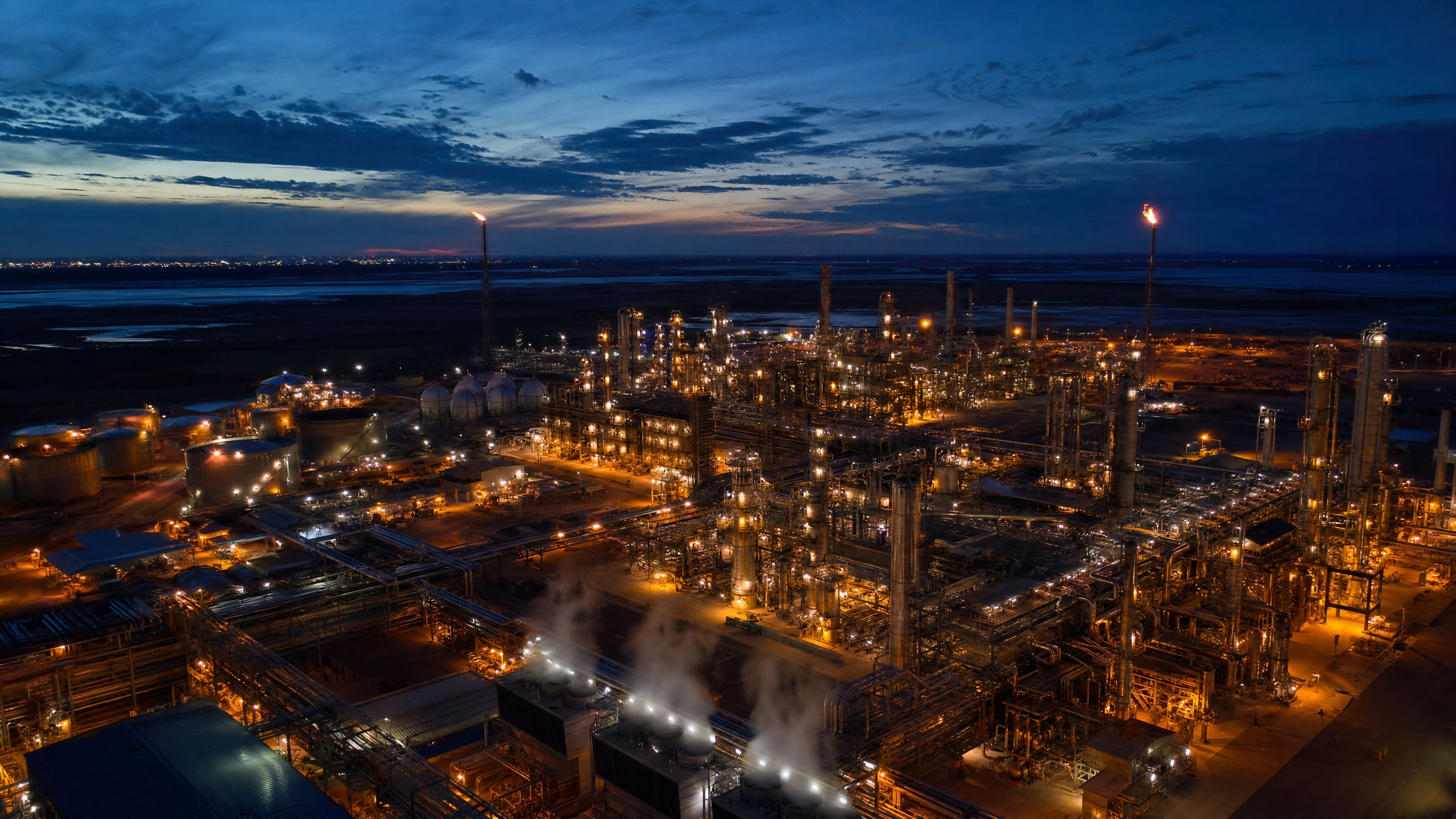
Oil & Gas Asset Intelligence
Safety-Critical Inspection With 80% Less Production Interruption.
We deliver engineering-grade condition data. Inspect storage tanks, flare stacks, pipelines, pressure vessels, and offshore structures without confined space entry, reducing your production shutdowns by up to 80%.

The True Cost of Deferred Inspection
Unplanned shutdowns in oil and gas cost $500,000 to $5,000,000+ per day in lost production
Every inspection that requires shutdown, confined space entry, or scaffolding competes directly with production revenue
Confined space entry for tank inspection requires 4-8 hours of isolation, purging, and atmospheric testing before a single photograph is taken
Corrosion under insulation (CUI) causes 40-60% of piping failures in ageing facilities, yet remains invisible to external visual inspection
Flare stack inspection traditionally requires full shutdown and scaffolding at $150,000-$500,000
Regulatory Compliance (AS 1210, AS 3788, API 510/570/653) demands inspection cycles that outpace available shutdown windows
Every hour your asset is offline for inspection is an hour of lost production. Every confined space entry is a risk that doesn't need to exist.
The True Cost of a Refinery Turnaround
How costs compound beyond base budget. Every additional day, every scope addition, every overrun multiplies exposure.
Sources: Opus Kinetic (2017), AP-Networks Turnaround Database (1,350+ events), Arix Technologies (2024), PetroHab Operational Analysis (2026). Base cost in 2017 dollars. Production loss based on large-scale facility ($250K/hr offshore benchmark). Actual exposure varies by facility size, complexity, and product margins.
Complete Condition Intelligence
All Environments. One Platform. Clear Insights
Elevated Asset Inspection
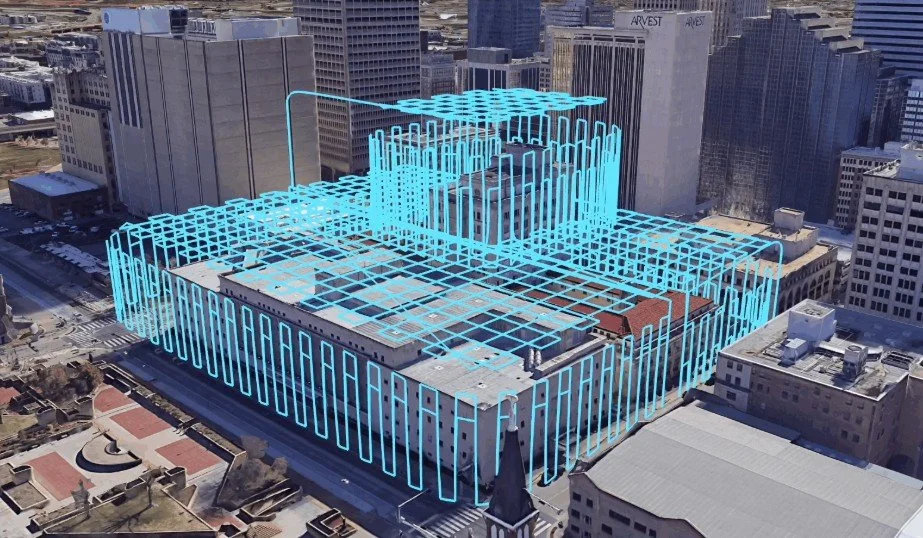
Flare stacks, columns, pipe racks, and cooling towers inspected from the air. No scaffolding, rope access, or shutdown required.Sensor capability:High-resolution visual with up to 200x hybrid zoom from safe standoff distances.Radiometric thermal (640x512) for CUI detection and gas leak screeningLiDAR at 3cm vertical accuracy, 950m detection range 59-minute flight endurance, IP54 weather rated Survey control: Ground control points (GCPs) and tilt-compensating GNSS receiver for survey-grade positional accuracy (+/-2cm).Deliverable: Classified point clouds (LAS/LAZ), photogrammetric reality meshes accurate to 3cm, and AI-powered defect detection trained on corrosion, pitting, cracking, and coating degradation specific to your asset types.Zero-Entry Internal Inspection
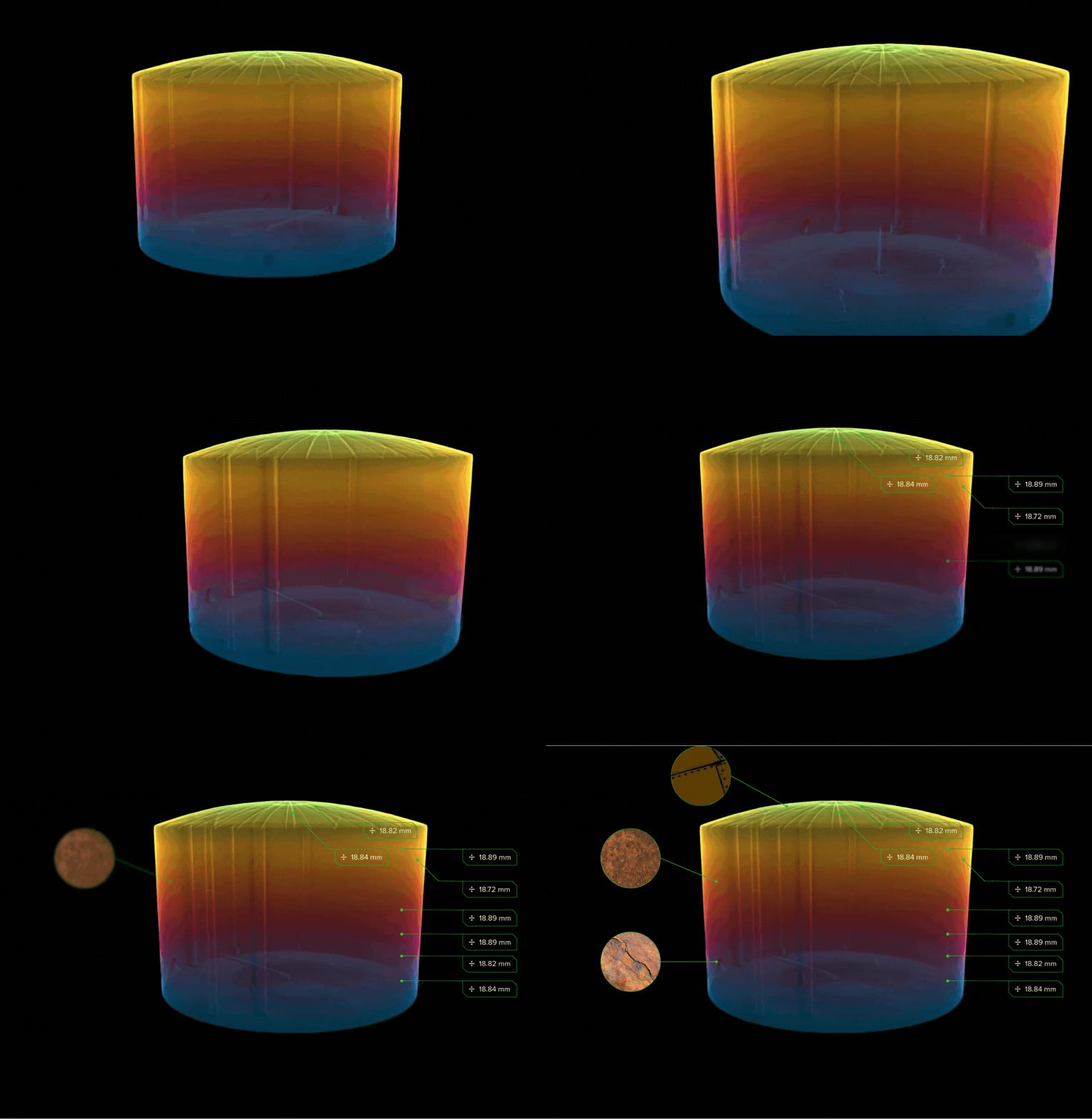
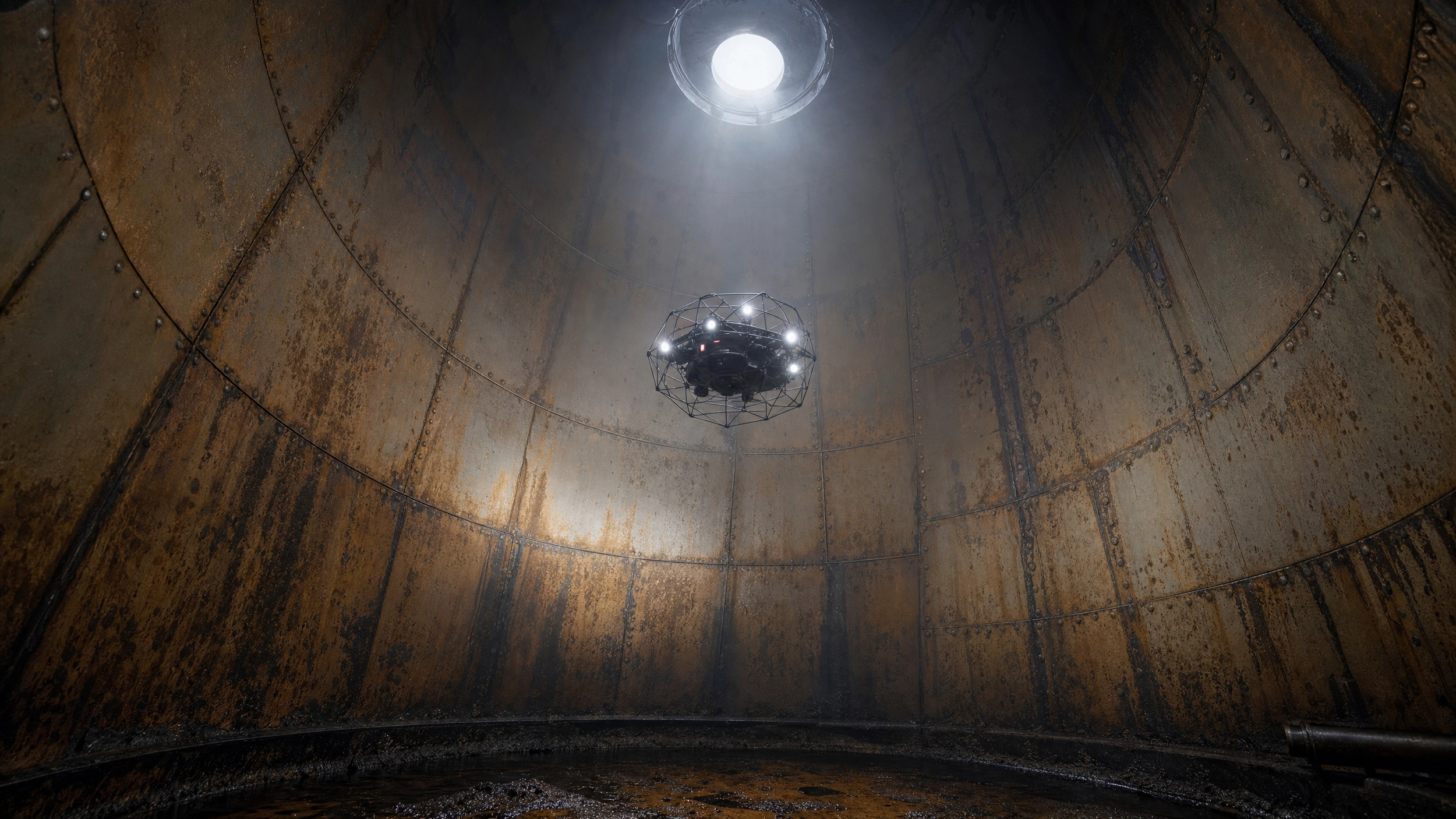
Inspect pressure vessels, storage tanks, and columns internally using our collision-tolerant confined space drone. No human entry, or internal scaffolding required. The vessel is isolated, drained, and ventilated before drone deployment.

Single deployment captures:

Visual, thermal, LiDAR, and ultrasonic thickness data (250 UTMs per hour)

Tethered power unit for unlimited flight duration in large vessels

Onboard gas safety sensor: triggers immediate withdrawal if combustible gas detected. Gas detection at 0.1% LEL resolution provides early warning for safe withdrawal

Digital iTwin deliverable:

All data unified in a single digital twin for engineering measurement, defect tracking, and compliance reporting.
Independent inspection capability across aerial, internal, subsea, and ground environments. All data unified in a single digital twin for engineering measurement, defect tracking, and compliance reporting.
Subsea & Submerged Assets
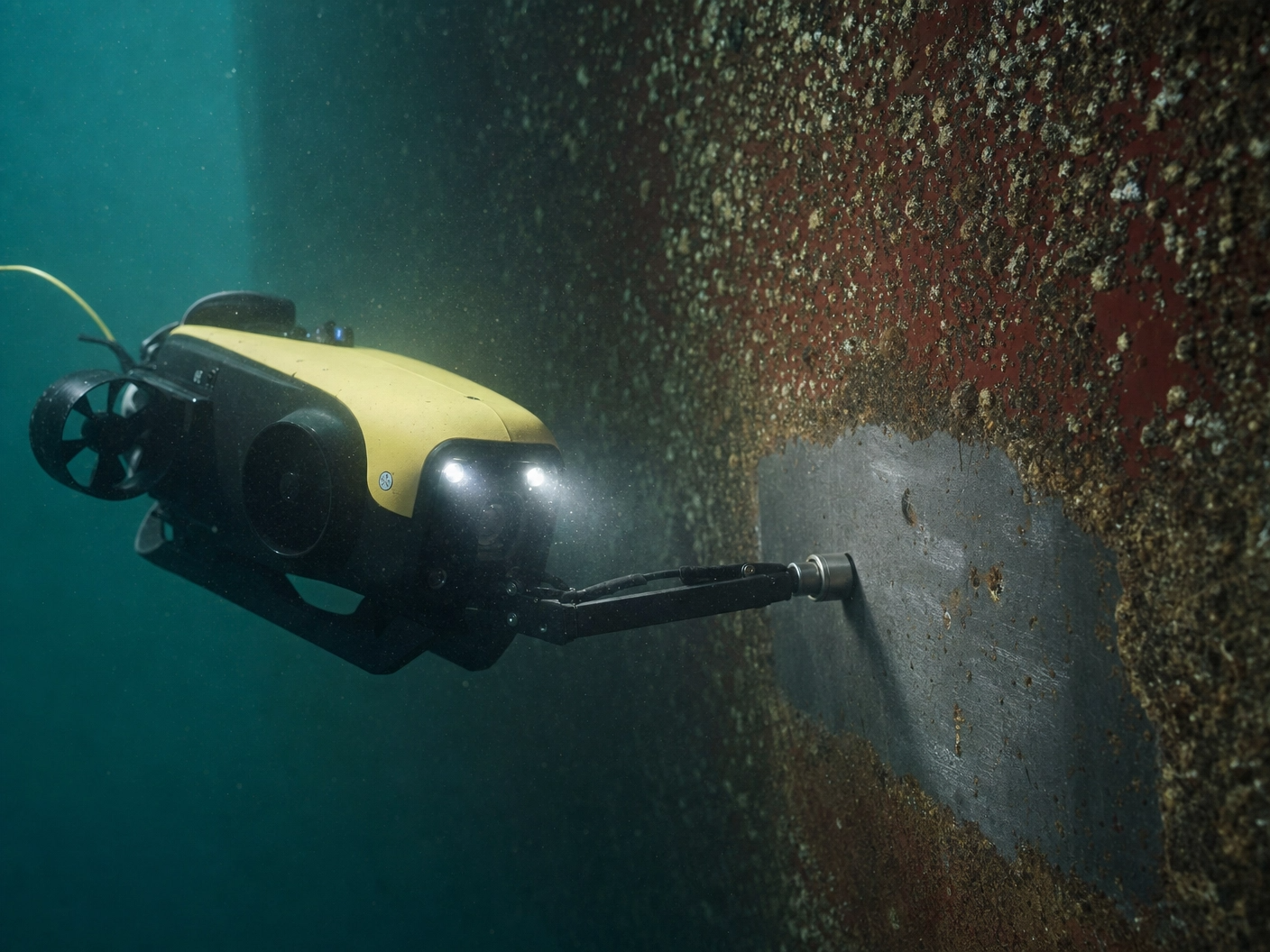
Inspection-class ROVs rated to 500m depth. No divers required. Minimal operational disruption.Capability:4K HDR imaging with 8x optical zoom Multibeam sonar for zero-visibility navigation Contact ultrasonic thickness measurement (UTM) for remaining wall thicknessUSBL acoustic positioning for defensible georeferenced records Topside power option for unlimited dive durationAI computer vision for real-time defect identification and autonomous survey patternsDeliverable: Subsea inspection data integrated into the unified asset digital twin alongside aerial and internal datasets for whole-of-asset condition visibility.Aerial & Ground Industrial Washing
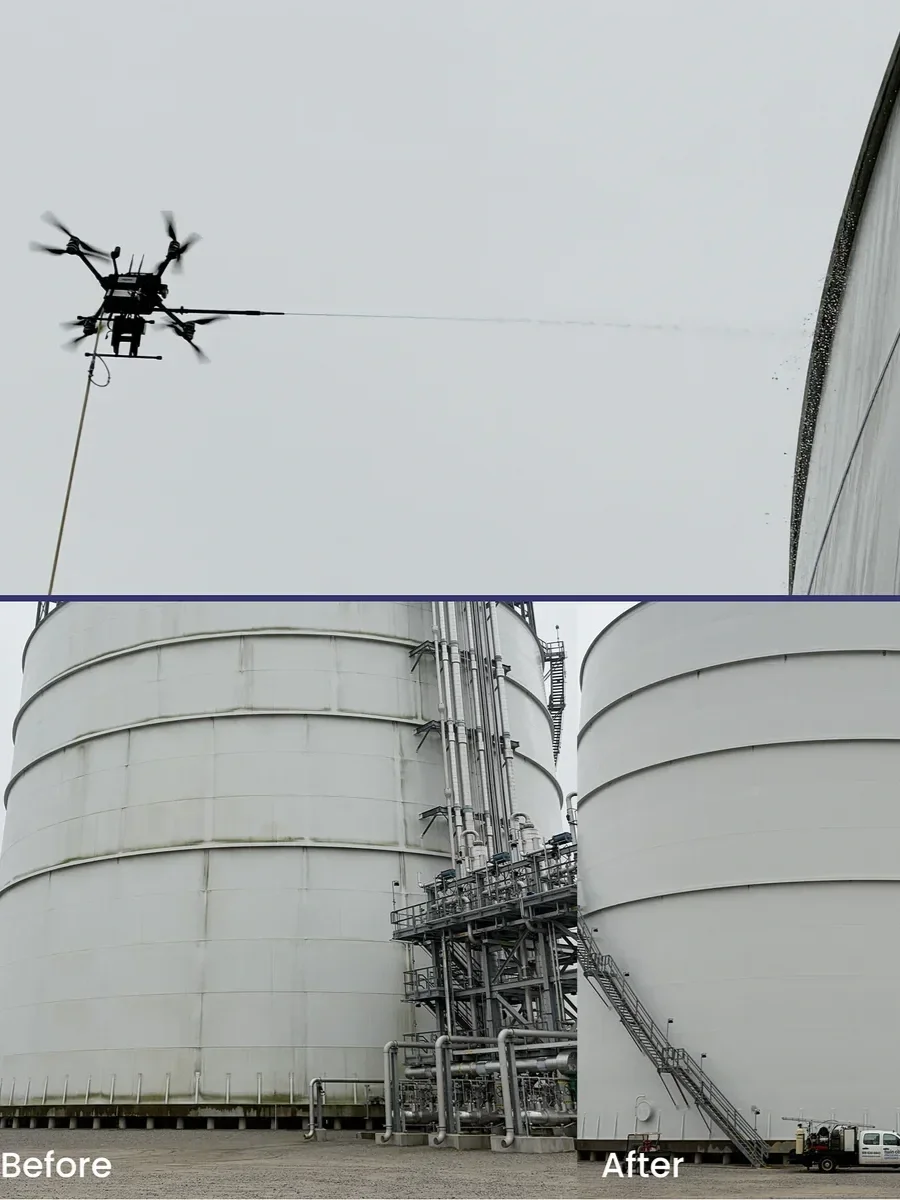
Pre-inspection surface cleaning and ongoing maintenance washing using a purpose-built wash drone with a proprietary advanced surface tracking and variable distance sensors. Capability:High-pressure or soft wash to 100m heightSolar panels, substation insulators, cooling tower surfaces, building facadesNo scaffolding, rope access, or EWP requiredImproves inspection data quality by removing surface contamination before sensor deployment
Deliverable: Before/after condition comparison overlaid on the asset digital twin for maintenance planning.Oil & Gas Assets
-
Storage Tanks (API 653)
Confined space drone (internal) + aerial (external) + UTM
Shell condition, floor mapping, roof integrity, corrosion mapping
Digital Twin output: Reality mesh + classified defect register + change detection
-
Pressure Vessels (AS 3788)
Confined space drone + thermal
Internal lining condition, refractory wear, corrosion under insulation indicatorsDigital Twin output: 3D defect map with position-tagged UTM readings
-
Flare Stacks & Columns
Aerial zoom + thermal (no shutdown)
Tip condition, refractory lining, structural integrity, and guy wire tensionDigital Twin output: Point cloud + thermal overlay + AI defect detection
-
Pipe Racks & Piping
Aerial thermal + visual
CUI indicators, flange leaks, insulation damage, and support corrosionDigital Twin output: Thermal anomaly map georeferenced to point cloud
-
Refineries & Processing Plants
MULTI-SENSOR & Platform + CONFINED SPACE
Comprehensive condition assessment, thermal anomaly mapping
Digital Twin output: Facility-wide digital twin with defect classification
-
Pipelines & Corridors
Aerial LiDAR + thermal + visual
Easement compliance, third-party encroachment, leak detection, and subsidence
Digital Twin output: Classified point cloud + change detection over time
-
Jetties & Marine Loading
AERIAL + UNDERWATER ROV
Scope: Pile condition, cathodic protection, marine growth, structural integrity
Digital Twin output: Combined above/below waterline digital twin
-
FPSOs & Offshore Platforms
Topside condition, hull UTM, riser inspection, flare tip assessment
Digital Twin output: Unified topside + subsea model with UTM overlay
-
Solar Panels & Insulators
AERIAL + GROUND DRONE WASHING
High-pressure or soft wash to 100m, no scaffolding, no ropes, no EWP
Digital Twin output: Before/after thermal comparison for performance validation
Measurable Outcomes for Oil & Gas Operators
$150K - $500k
Saved per flare stack inspection by eliminating scaffolding and shutdown4 - 8 Hours
Eliminated per tank entry (isolation, purging, atmospheric testing)From Scope to Actionable Intelligence
40-60%
Of piping failures are caused by CUI, detectable with thermal & UTM before failure90%
Reduction in personnel exposure to hazardous environmentsStep 1: Technical Scoping
We review your asset register, inspection history, and compliance obligations. We identify which assets can be inspected without shutdown, which require coordination with planned outages, and what sensor combinations deliver the data your engineers need.Step 2: SIMOPS Planning & Mobilisation
We develop a detailed inspection plan that integrates with your PTW system, SIMOPS requirements, HAZID and site safety protocols. Our team mobilises with enterprise platforms configured for your specific asset types and hazardous area classifications.Step 3: Multi-Environment Capture
Aerial drones capture elevated assets and thermal baselines. Confined space drones enter vessels and tanks without human entry. ROVs inspect submerged and subsea components. All data is georeferenced and time-stamped for audit trail integrity.Step 4: Engineering-Grade Reporting
Every dataset is processed through our enterprise reality modelling platform.Outputs include:Defect registers with severity classification Corrosion mapping with remaining life estimates Reality meshes and classified point clouds AI-powered defect detection (corrosion, pitting, cracking, coating degradation) Browser-based 3D delivery (no software install, shareable, measurable from any device) Compliance-ready reports aligned to AS 3788, API 510/570/653, and your internal standards.Zero-Exposure Inspections for Hazardous Environments
Process Thermal Anomaly Detection:
Identify failing equipment before it fails. Detect overheating bearings, pump seals, electrical faults, and heat exchanger degradation across your entire facility in a single aerial campaign.
Radiometric thermal identifies temperature anomalies that indicate imminent failure: overheating bearings, deteriorating pump seals, loose electrical connections, blocked heat exchanger tubes, and refractory breakdown. Aerial deployment systematically covers all process areas, building a thermal baseline that enables change-over-time comparisons. Anomalies are georeferenced to the asset digital twin for integration into your predictive maintenance program. What you eliminate: Unplanned shutdowns from equipment failure. Manual thermography requires scaffolding or rope access. Reactive maintenance costs (typically 3-5x planned maintenance). Production losses from cascading failures. 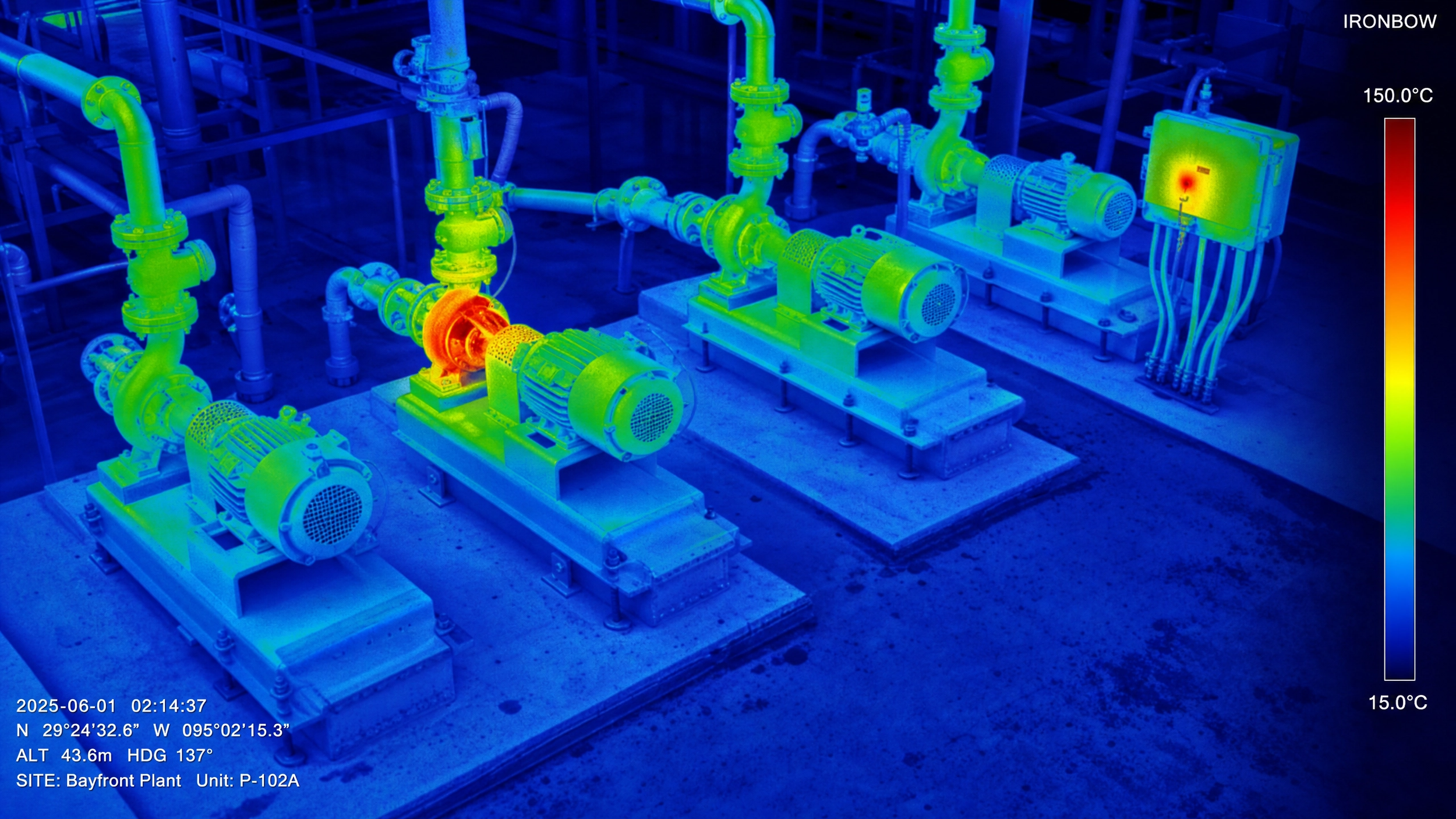
Confined Space Vessel Inspection
Complete internal condition data in hours, not weeks. No human enters the space. The vessel is isolated, drained, and ventilated, but does not require the full gas-free certification process that human entry demands. This alone saves days from your shutdown window. A single deployment captures visual imagery, thermal data, LiDAR point clouds, and ultrasonic thickness measurements (250 UTMs per hour) simultaneously. An onboard gas sensor provides continuous safety monitoring, with the pilot trained to withdraw immediately if any combustible gas is detected. What you eliminate: Full gas-free certification (days of purging). Internal scaffolding. Confined space entry permits. Rescue standby teams. Breathing apparatus. Human exposure to residual hydrocarbons.
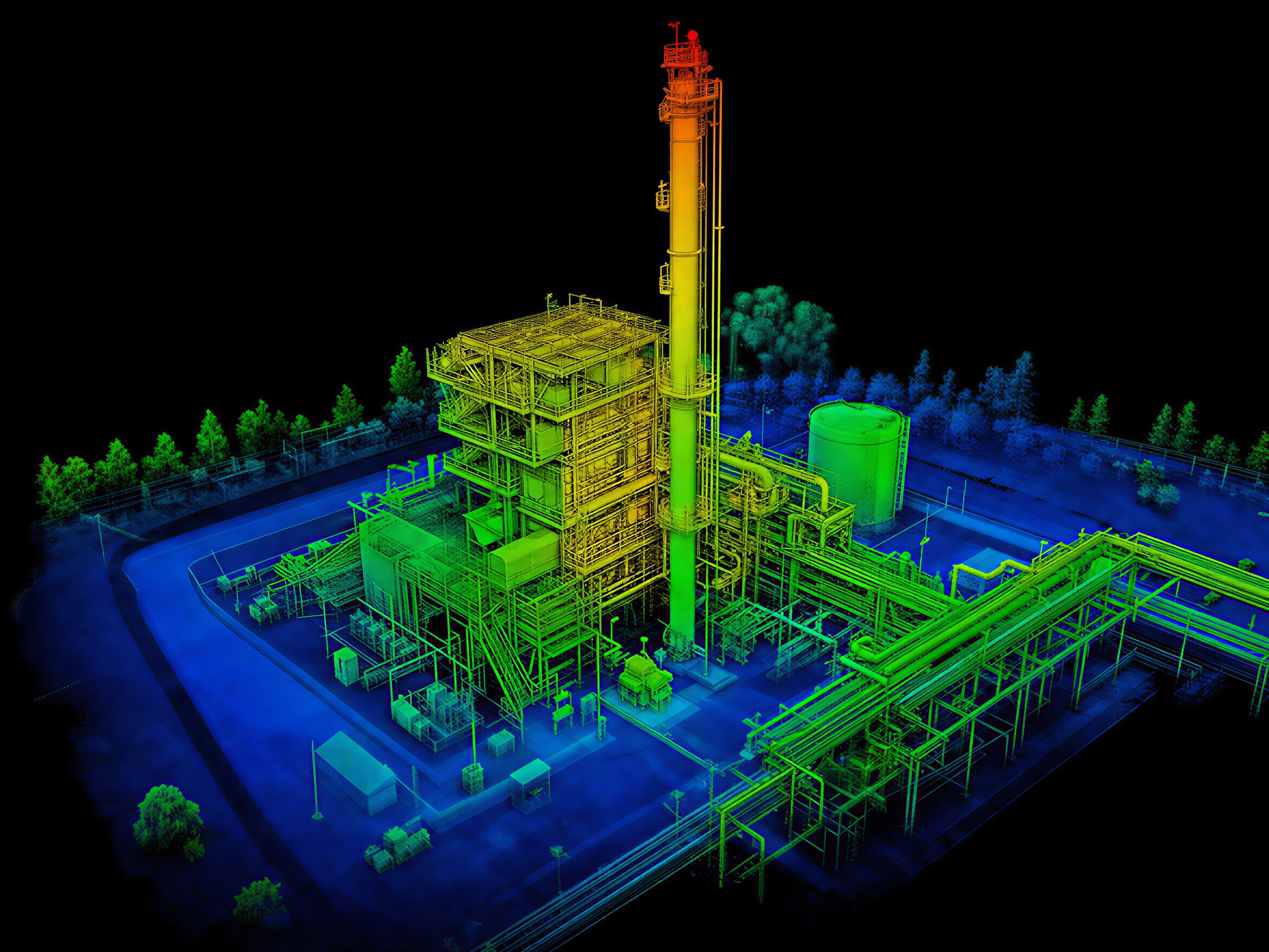
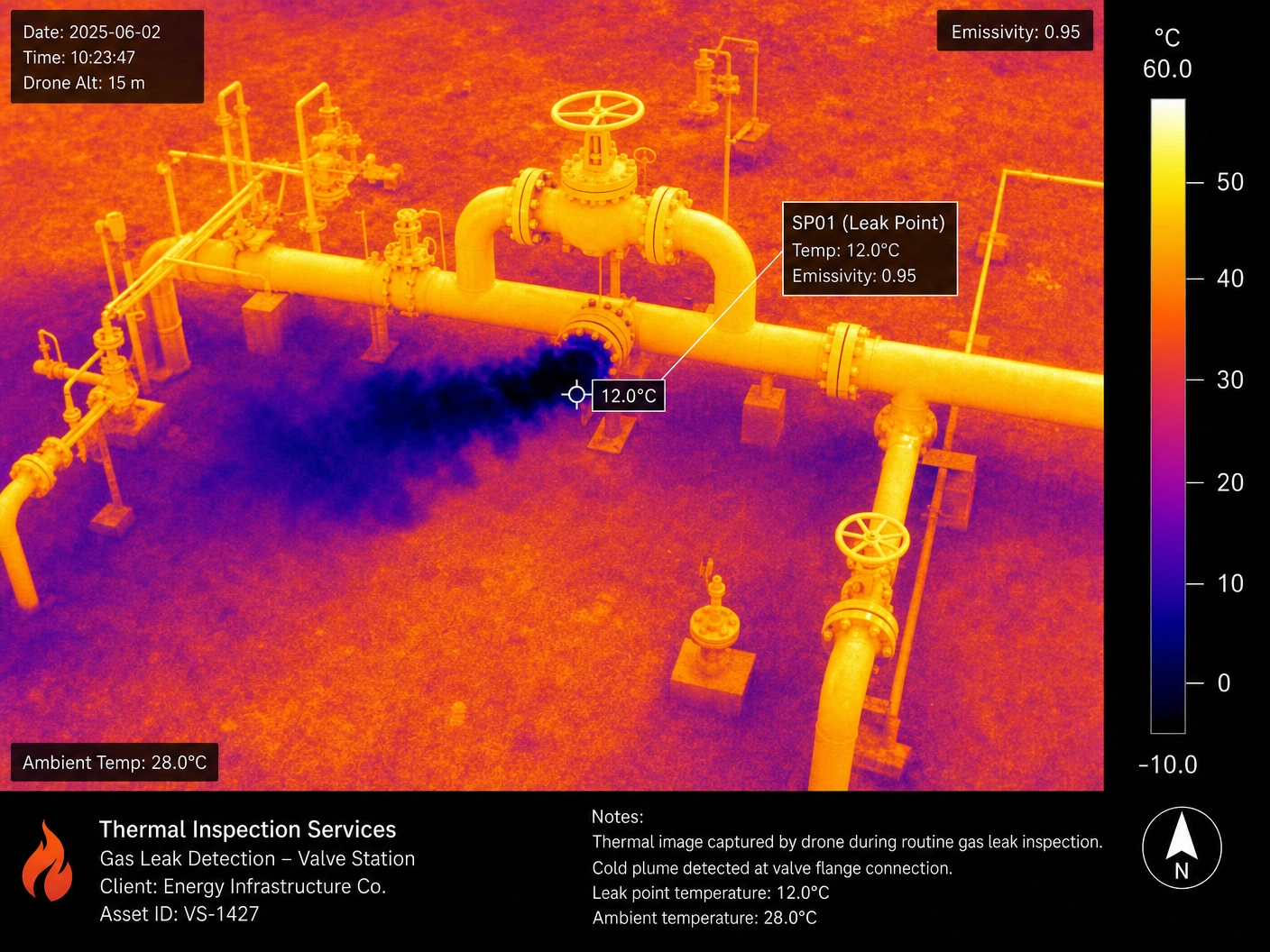
Aerial Thermal Gas Leak Detection:
Screen entire pipe rack runs, valve manifolds, and tank connections from the air in a single flight. No ground crew exposure to hazardous atmospheres.
Radiometric thermal imaging (640x512 resolution) detects gas leaks at flanges, valves, and pipe connections by measuring temperature differentials. Escaping pressurised gas creates a measurable cooling effect visible on thermal imagery. This enables rapid screening of large areas that would take ground crews days to cover on foot, identifying leak locations for targeted repair without exposing personnel to potentially toxic or explosive atmospheres. What you eliminate: Ground crew walking pipe racks in hazardous zones. Manual sniffers and leak detection. Multi-day screening campaigns. Personnel exposure to H2S, hydrocarbons, and toxic gases. 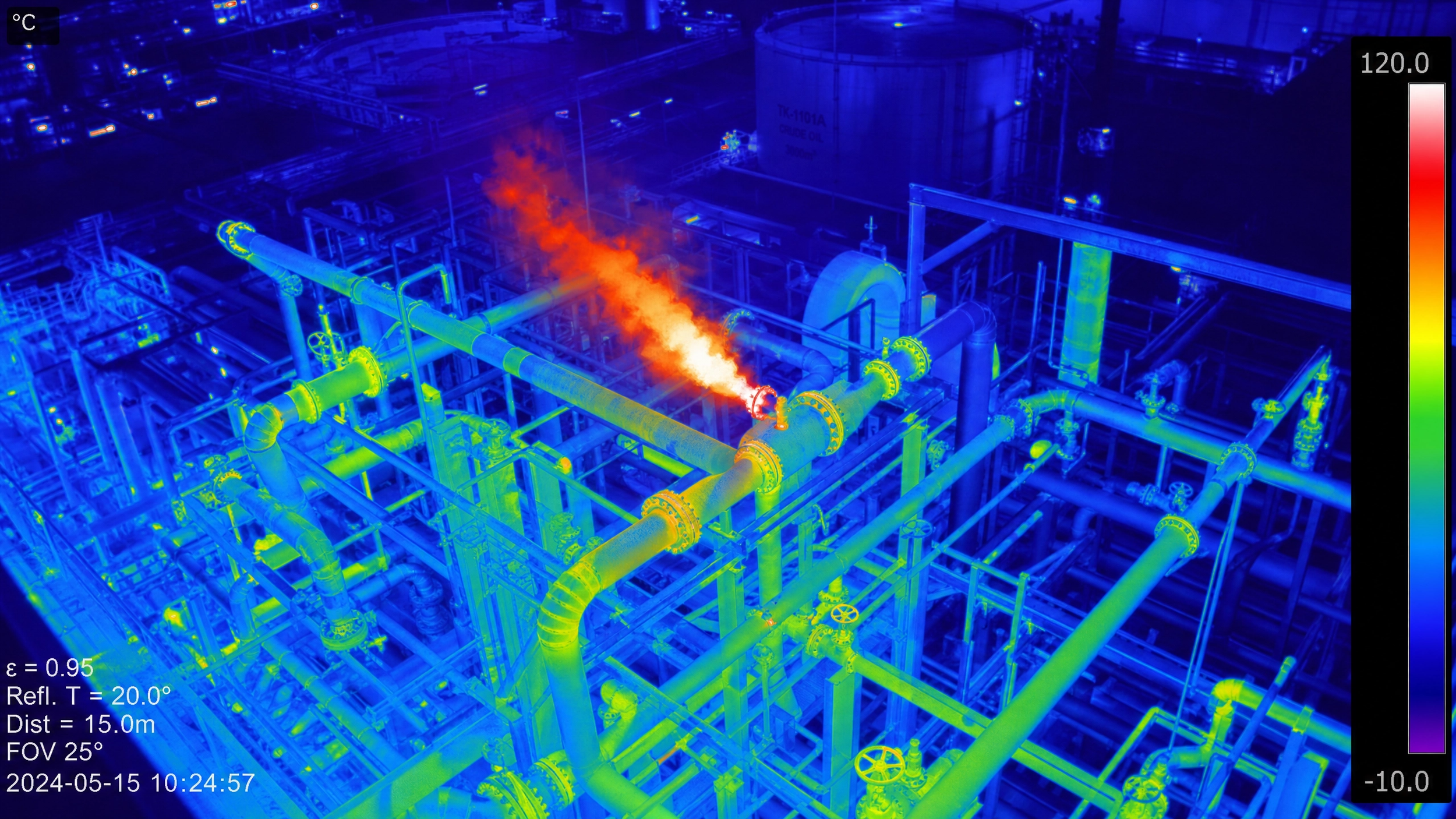

Calculate Your Estimated Savings
Oil & Gas Inspection Program Savings Calculator
Estimate the total value of transitioning from traditional to robotic inspection across your facility.
Request Your Full Scoping Report
We'll prepare a detailed assessment based on your inputs above, including a tailored inspection program, timeline, and ROI analysis.

Risk Elimination Comparison: Oil & Gas Assets
| Asset | Traditional Method | Traditional Risk | DeepSky Method | Risk Eliminated | Cost Impact |
|---|---|---|---|---|---|
| Flare Stacks | Shutdown + scaffold to 80-120m | Falls from extreme height, hot work, $500K-$2M shutdown | Drone visual/thermal while operating | Avoids shutdown entirely | $500K-$2M saved per event |
| Pressure Vessels | Confined space entry, toxic atmosphere (H2S, hydrocarbons), rescue team | Fatality from atmospheric hazard | Confined space drone captures visual, thermal, LiDAR, and 250 UTMs/hour. No human entry. No scaffolding. No rescue teams. Shutdown reduced from weeks to days. | Zero human exposure to toxic atmosphere | 60-80% reduction |
| Columns & Towers | Internal scaffold or rope access, gas-free required | Confined space + falls from height combined | Confined space drone internal flight, systematic coverage | Eliminates both hazards simultaneously | 70-85% reduction |
| Storage Tanks (API 653) | Scaffold internal, confined space entry, 3-7 days gas-free | Confined space fatality, residual hydrocarbon exposure | Confined space drone with UT payload, no gas-free required for visual | Eliminates entry requirement | 60-80% reduction |
| Subsea Pipelines & Risers | Commercial diving, saturation diving at depth | Drowning, decompression illness, hypothermia | ROV with UTM probe, unlimited bottom time | Eliminates all diving hazards | 60-75% reduction |
| FPSOs / Platforms | Rope access over water, dropped objects | Over-water falls (often fatal), struck-by | Drone topsides + ROV hull/risers | Eliminates over-water fall risk | 40-60% reduction |
The Value Drivers
| Inspection Scope | Traditional Cost | Your Saving |
|---|---|---|
| Vessel inspection (internal, 10m diameter) | $120K - $200KScaffold + confined entry + gas-free certification | $90K - $170K per vessel |
| Flare stack inspection | $500K - $2MFull shutdown + scaffold erection to 80-120m | $490K - $1.98M per event |
| Subsea pipeline (1km section) | $80K - $150KCommercial dive spread, 3-5 days | $55K - $100K per km |
| Tank farm (10 tanks, API 653) | $800K - $1.5MScaffold each tank + confined entry | $500K - $1.2M per campaign |
| Annual inspection program (typical refinery) | $2M - $5M | $1.4M - $3.5M annually |
Liability Mitigation
Under the Work Health and Safety Act 2011 (s.17-18), a PCBU must eliminate risks so far as is reasonably practicable. The hierarchy of controls mandates elimination as the first priority. If robotic inspection delivers the same data without human exposure, human entry for routine inspection is no longer "reasonably practicable."Scope Your Next Turnaround Inspection
Whether you need a single tank entry or a facility-wide integrity assessment, we scope to your shutdown schedule, PTW requirements, and compliance obligations. No obligation. Scoping discussions define deliverables and program structure.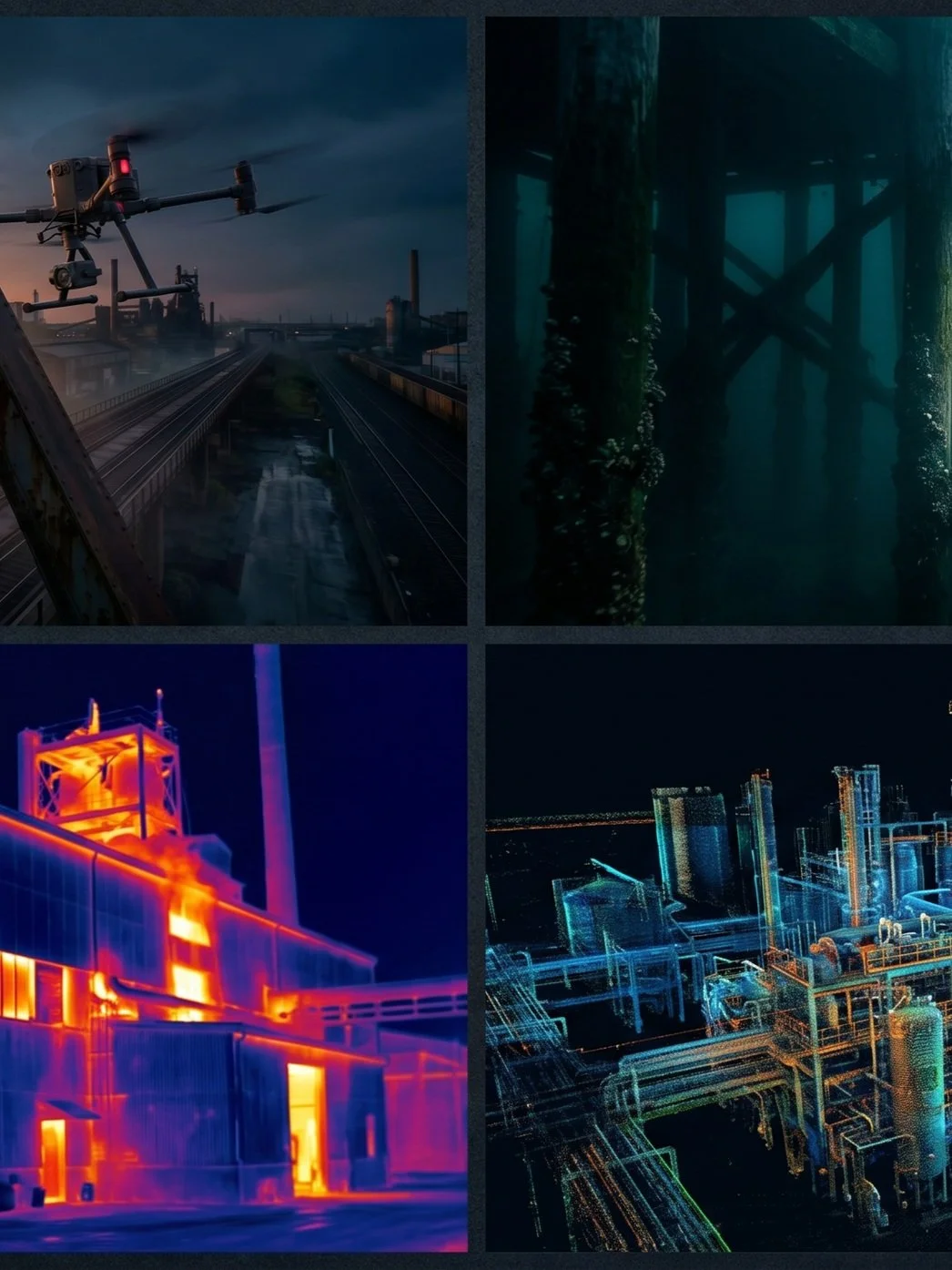
Frequently Asked Questions
Can you inspect tanks and pressure vessels without human entry?
Yes. Once the vessel has been isolated, purged, and confirmed gas-free by your operations team, our collision-tolerant confined space drones deploy through standard manhole openings (500mm+) to inspect the entire internal surface without any person entering the space. The drone captures high-resolution imagery, LiDAR point clouds, thermal data, and ultrasonic wall thickness measurements. While isolation and gas-freeing are still required, the inspection itself completes in 2-5 hours rather than the 3-5 days typically needed for scaffolding erection, human entry permits, rescue standby teams, and manual inspection. This significantly compresses your turnaround critical path.
How do drone inspections reduce turnaround duration and cost?
The primary saving is in what happens after the vessel is made safe. Traditional inspection requires scaffolding erection (1-3 days), confined space entry permits, rescue standby crews, and manual inspection with limited coverage. Our drones eliminate all of that, completing the inspection in hours once access is available. Pre-turnaround aerial surveys also identify external scope before shutdown, reducing discovery work during the critical path. Clients typically report 40-60% reduction in scaffolding costs and significant compression of inspection-related shutdown duration. Every day saved on turnaround represents $500,000 to $2,000,000 in avoided production loss depending on facility throughput.
What pipeline inspection capabilities do you offer?
We provide aerial corridor inspection using LiDAR and multispectral sensors for above-ground pipelines, detecting coating degradation, ground movement, vegetation encroachment, and third-party interference. For external pipeline inspection, our drones capture detailed imagery of pipe racks, supports, and insulation condition without scaffolding. Subsea pipelines are inspected using our enterprise ROVs with sonar, visual, and CP (cathodic protection) measurement capabilities. All data integrates into a single pipeline digital twin for ongoing condition trending and integrity management.
Can you detect gas leaks and fugitive emissions from the air?
Yes. We deploy Optical Gas Imaging (OGI) cameras and methane-specific sensors on our drone platforms to detect and quantify fugitive emissions across facilities. This provides rapid LDAR (Leak Detection and Repair) screening of entire facilities in hours rather than weeks of manual component-level surveying. Detected leaks are georeferenced and mapped onto the 3D facility model with concentration data, enabling maintenance teams to locate and repair sources immediately. This supports NGER reporting obligations and emissions reduction targets.
How do you inspect flare stacks and elevated structures without shutdown?
External inspections of flare stacks, columns, towers, and elevated structures are conducted while the facility remains operational. Our enterprise drones use high-resolution zoom cameras (200x equivalent) and thermal imaging to capture detailed condition data from safe standoff distances. This covers flare tips, refractory condition, structural connections, guy wires, and coating degradation. No cold shutdown, scaffolding, or rope access teams at height are required for external inspection, which typically costs $150,000-$500,000 per flare stack using traditional methods.
What safety certifications and protocols do you operate under?
We hold a CASA commercial operators licence with advanced endorsements including Extended Visual Line of Sight, night operations, and operations over populated areas. We carry $20M public liability insurance and hold ISO 9001 (Quality), ISO 14001 (Environmental), and ISO 45001 (Work Health and Safety) certified management systems. All operations on oil and gas facilities are conducted under your site permit-to-work system, with documented risk assessments, JSEAs, and compliance with hot work exclusion zones and emergency response protocols. Our drones do not operate in live hazardous atmospheres; all confined space inspections occur after the space has been isolated, purged, and confirmed safe.
Can you create a complete digital twin of our entire facility?
Yes. We combine aerial LiDAR and photogrammetry (external structures, pipe racks, tank farms), confined space drones (vessel internals after isolation), ground-level 360-degree capture (process areas, pipe bridges), and underwater ROVs (cooling water intakes, subsea pipelines, jetty piles) into a single unified digital twin. The result is a complete, measurable 3D replica of your facility accessible from any web browser. Engineers can measure distances, plan modifications, verify clearances, and track condition changes without site visits. The model is built progressively and does not require a full facility shutdown to complete.
How does your inspection data integrate with our integrity management system?
Deliverables are structured for direct integration into integrity management platforms including Meridium APM, PCMS, Visions, and SAP PM. Outputs include georeferenced defect registers with API 570/653/510 severity classification, corrosion rate calculations, remaining life estimates, and risk-based inspection scheduling recommendations. Wall thickness data maps directly onto the 3D model as colour-coded CML (Condition Monitoring Location) overlays. All data exports in open formats for seamless ingestion into your existing workflows without manual re-entry.