

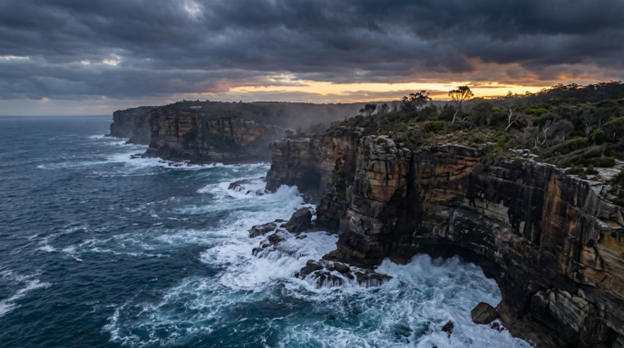
Environmental Intelligence for Compliance and Conservation
Move beyond manual transects.
Providing NRM bodies, environmental consultants, and mining operators with engineering-grade spatial data to meet EPBC Act offset obligations and track rehabilitation success across thousands of hectares.Objective, repeatable monitoring data for EPBC Act compliance, rehabilitation bond release, and conservation programs. 100% site coverage. Zero ground disturbance. Centimetre accuracy.
1 in 7 EPBC Act approvals were found non-compliant in the 2024 audit.
The Compliance Landscape Has Changed
Are the methods you are using today adequate when enforcement in enhanced?$55M
Alcoa fine for illegally clearing 2,100 hectares (Feb 2026) [2]
$825M
Proposed maximum civil penalty under EPBC Act reforms [5]
The Challenges
The Visibility Problem:
You cannot detect early signs of vegetation stress, disease, or subtle changes in soil health with standard visual inspections. By the time your field team identifies the issue, the damage is already severe.The Subjectivity Problem:
Two ecologists walking the same transect will record different observations.Your year-on-year comparisons rely on consistency that manual methods simply cannot deliver.The Fragmentation Problem:
Separate providers for aerial, ground ecology, water quality, and fauna deliver incompatible data formats on different timelines. No single view of environmental conditions. No spatial correlation between datasets. No way to track how one factor influences another.1 in 7
EPBC Act approvals non-compliant with offset conditions (2024 audit) [1]The Scale Problem:
Your field teams spend weeks walking transects that capture only 5-15% of the total site. Extrapolating this data across hundreds of hectares leaves significant gaps.$520M
McArthur River Mine rehabilitation bond [3]The Biosecurity Problem:
Every time you deploy ground crews into your offset area, you risk introducing weeds, pathogens, or soil disturbance. Setting back your rehabilitation progress.
DeepSky Terra: A Living Environmental Digital Twin
Every data acquisition builds a measurable, queryable 3D environmental model. Not a just PDF report that sits in a drawer, a digital twin where your team and regulators can compare any two dates, measure vegetation health and growth at the individual plant level, and track compliance trajectory in real time. Less time in compliance activity, streamline communications and build trust.The technology captures the data. The platform turns it into intelligence.
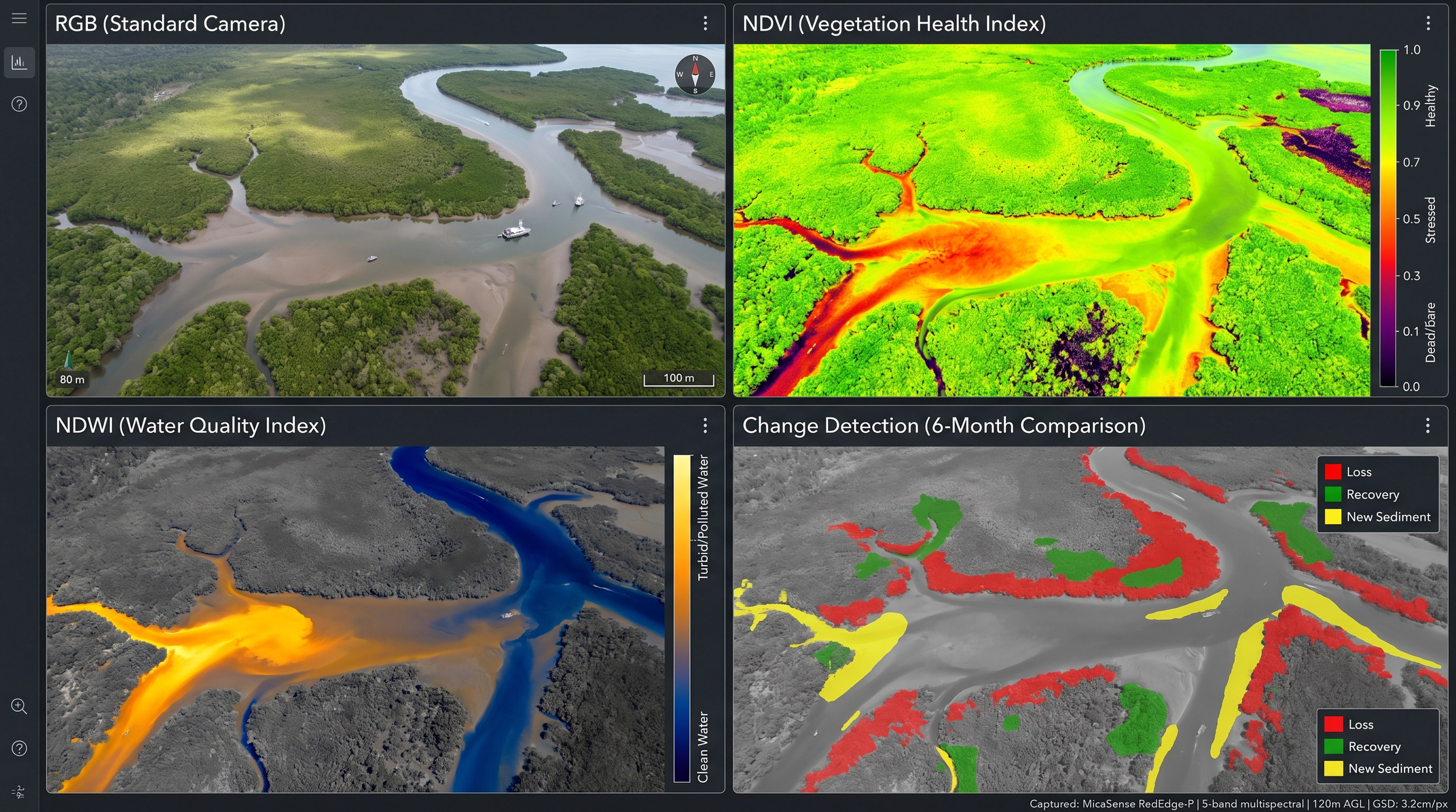
We deploy multispectral, thermal, and LiDAR sensors alongside underwater ROVs to capture the true state of your environment, from canopy top to bare earth to below the waterline. All data is processed through our enterprise reality modelling platform, generating centimetre-accurate 3D terrain models, NDVI vegetation health maps, and automated temporal change detection. Your environmental digital twin is accessible via a browser-based 3D viewer; interactive models are viewable from any web browser, by any stakeholder, at any time.As surveys accumulate, the model becomes predictive, identifying areas trending toward non-compliance before they breach thresholds, and quantifying rehabilitation trajectory for bond release applications.Monitoring Capabilities
Vegetation & Land Health
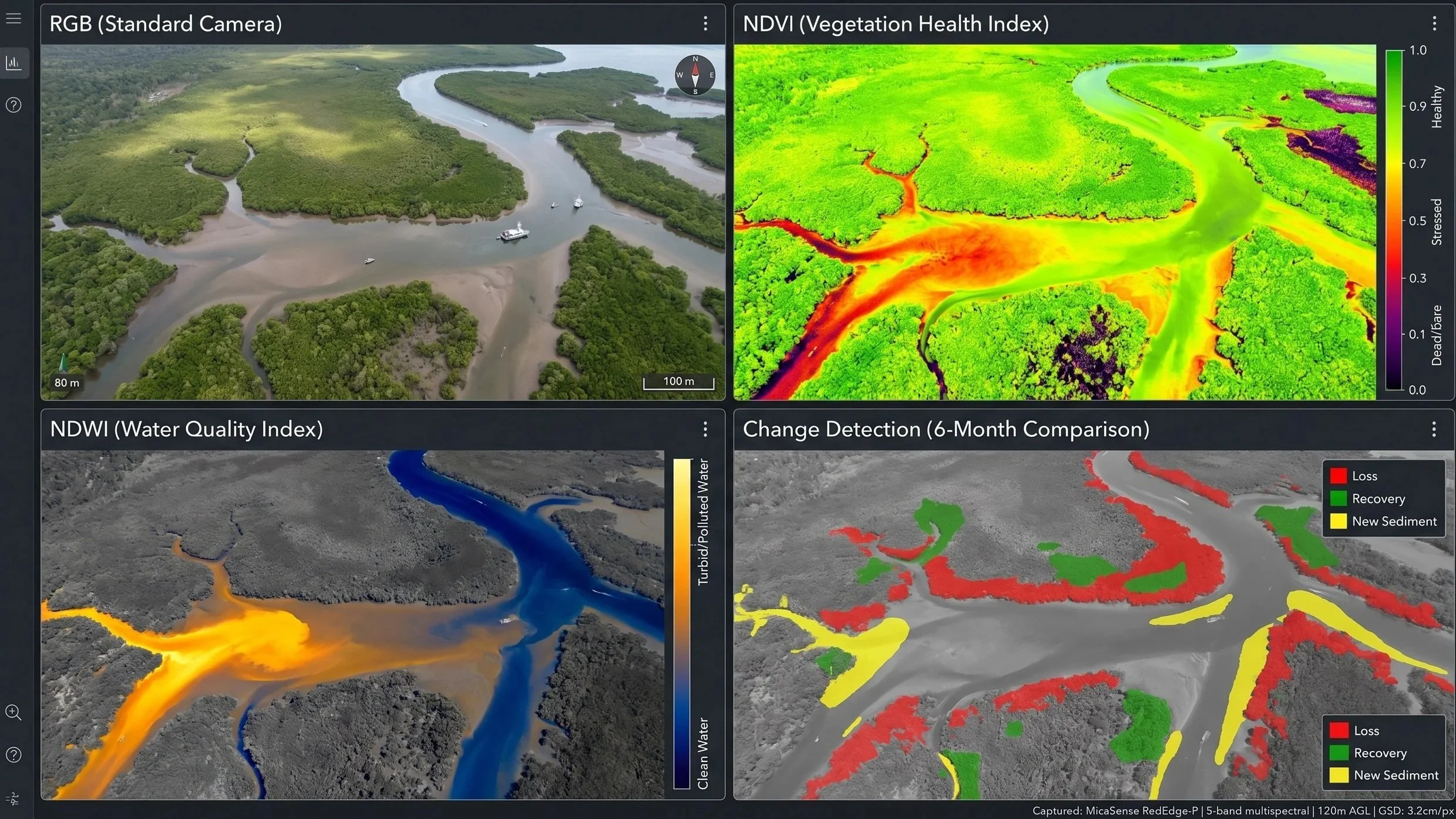
NDVI multispectral mapping: 2-5cm GSD, 60-500x better than satellite resolution.LiDAR canopy penetration: Maps true ground surface beneath dense vegetation.High-resolution orthomosaics: Objective visual baseline, year-on-year comparison.Weed, disease, and pest detection: Early AI and ML supported identification & management before it is visible to the naked eye.Erosion volumetrics: Centimetre-precise soil loss measurement between epochs.Time-series 3D terrain models track volumetric erosion, vegetation growth, and soil movement with centimetre precision. Compare any two survey dates instantly in your environmental digital twin.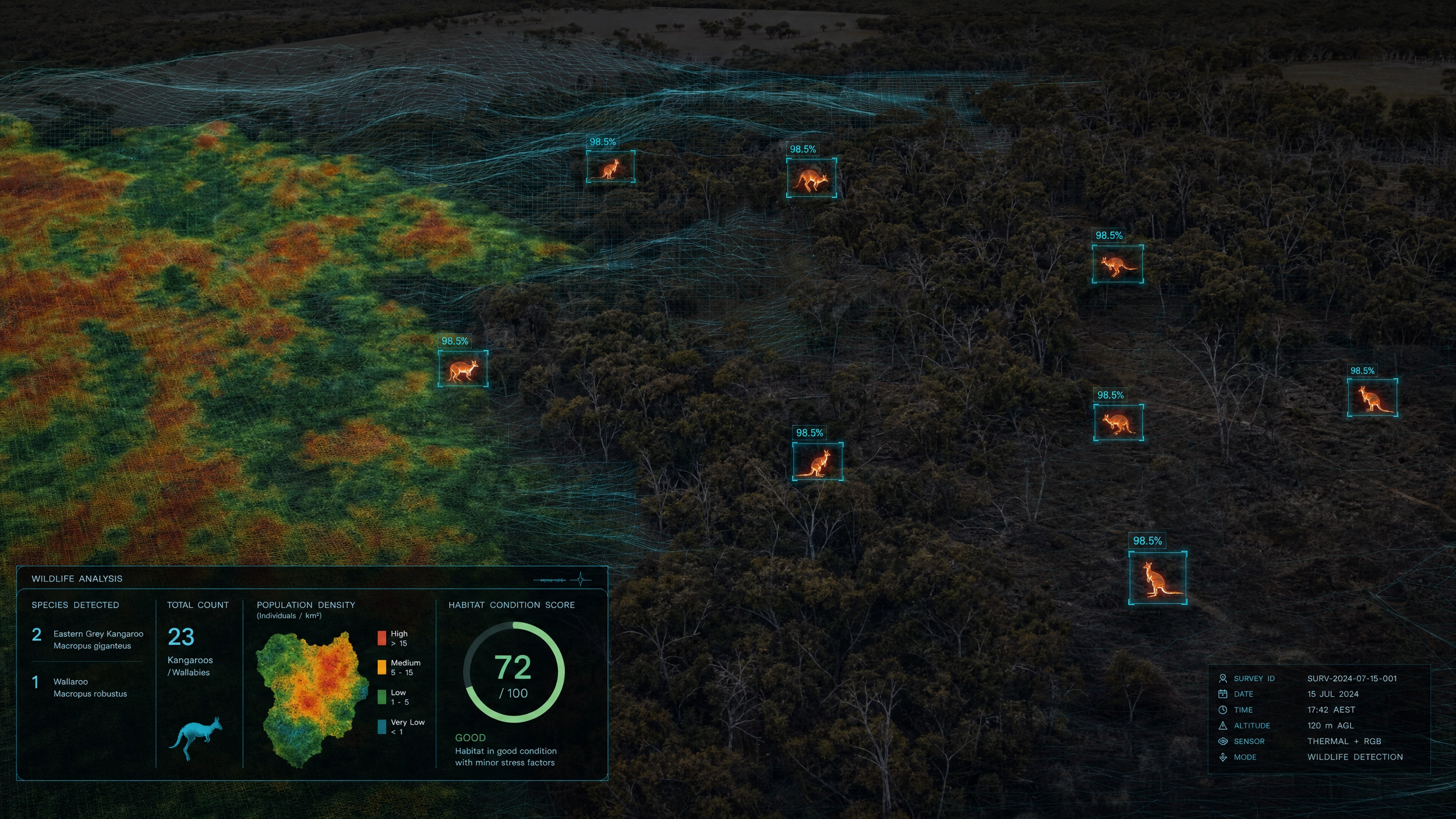
Marine & Coastal:
Aerial + ROV combined surveys: Above and below waterline in a single mobilisation..Coral reef health assessment: Seagrass mapping, bleaching detection.. Coastal erosion volumetric tracking: Precise measurements, between any two dates..Marine mammal population surveys: Accurate counting with thermal detection. Bathymetric mapping: Depth contours, capacity estimates, sediment tracking. Unified above-and-below-waterline 3D models combine aerial photogrammetry with ROV data. Track coastal erosion and marine habitat condition in one interactive model, no separate providers, no incompatible datasets.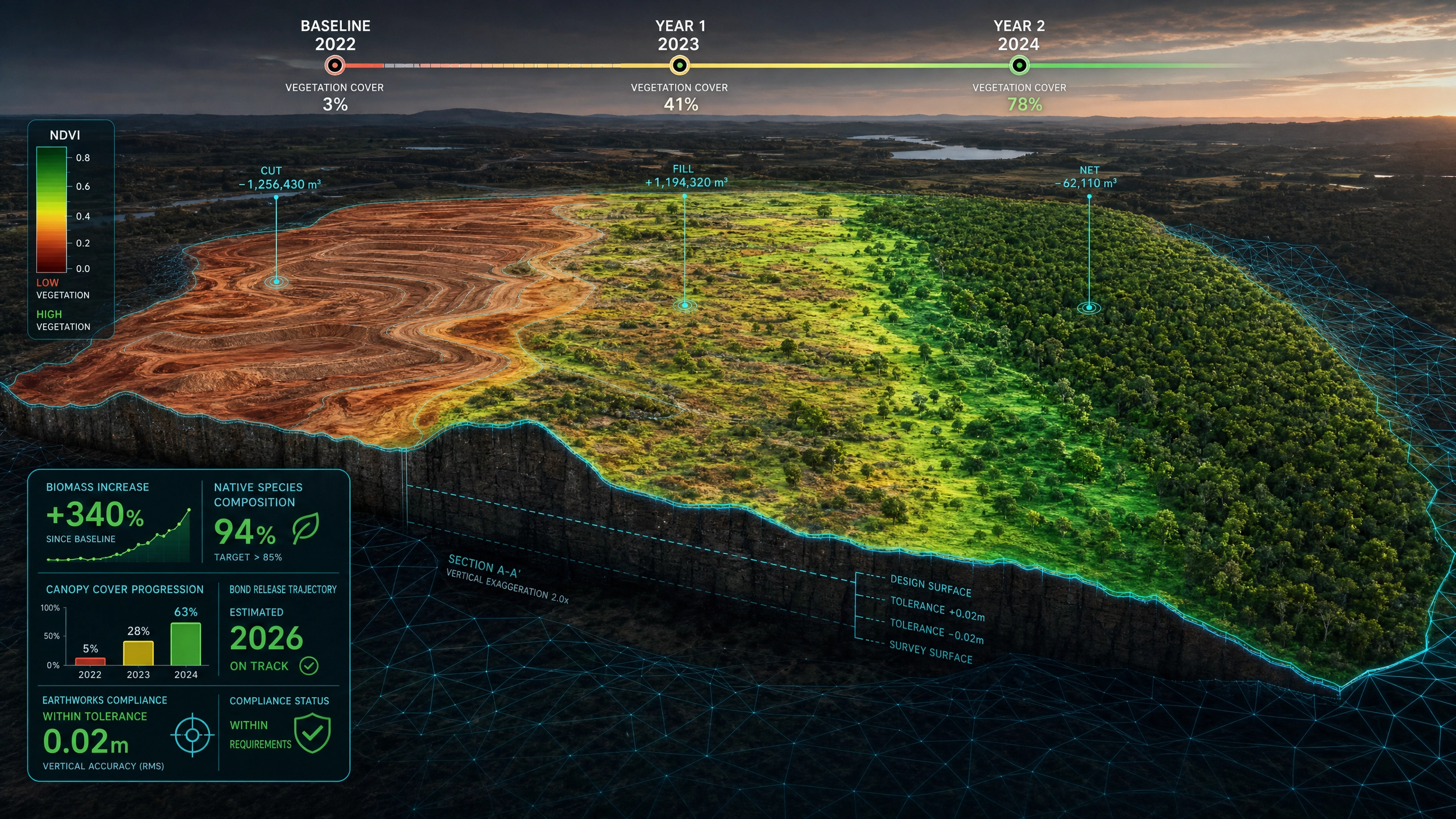
Wildlife & Species
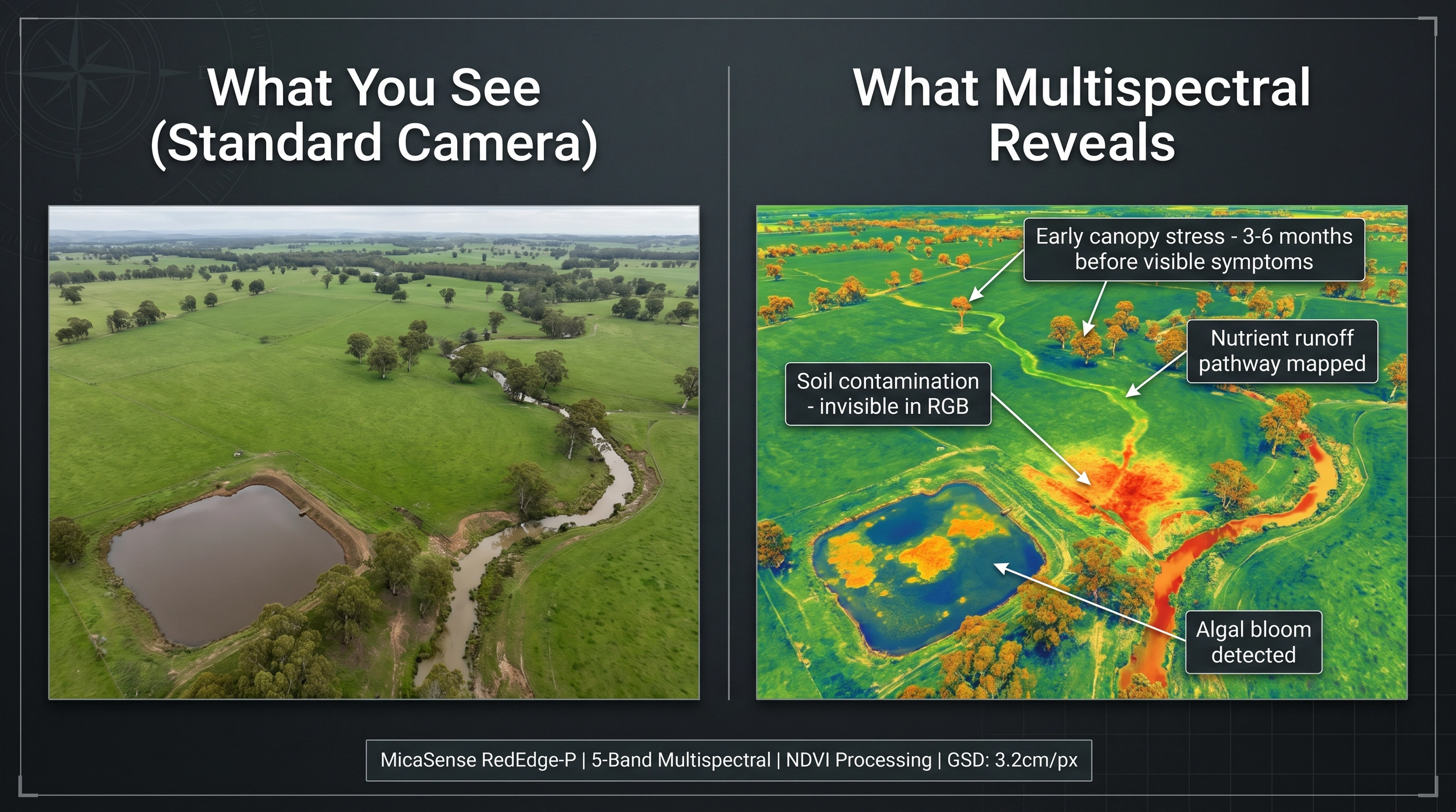
Thermal wildlife surveys: Nocturnal, dense vegetation, nesting sites detected without disturbance.AI-powered species detection and counting: 98.5% accuracy , consistent across all surveys..Non-invasive population tracking: Repeatable flight paths, zero disturbance.Migration pattern monitoring: Breeding colony assessment, over multiple seasons.Habitat condition correlation: Population data overlaid on vegetation health maps.Georeferenced wildlife detection data overlaid on 3D habitat models. Track population density changes against habitat condition over time, the correlation between vegetation health and species presence becomes measurable.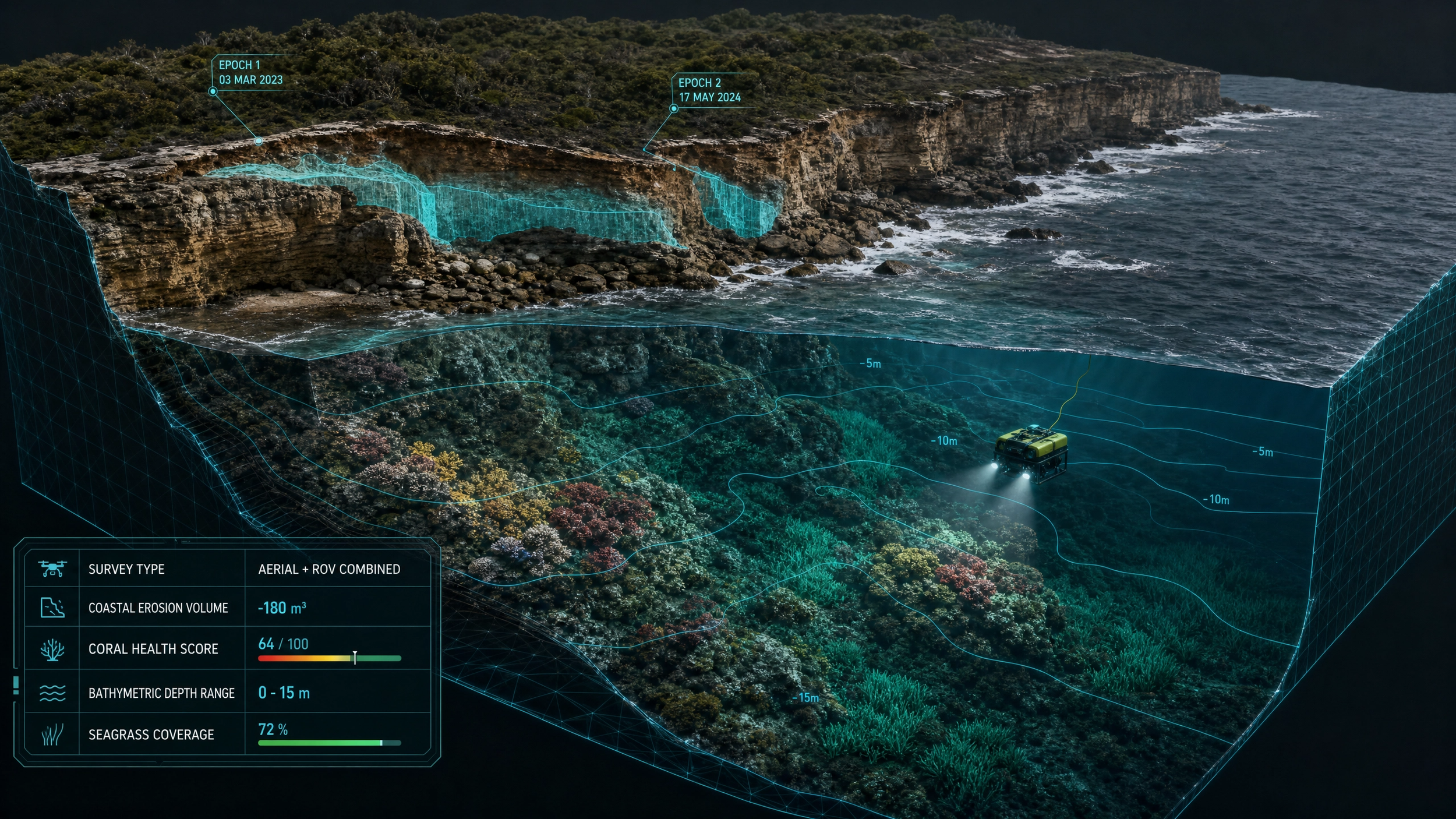
Rehabilitation & Compliance
EPBC Act offset monitoring: Repeatable, defensible data across 100% of offset area.Mining rehabilitation progress tracking: Quantified evidence for bond release.Bushfire recovery monitoring: dNBR burn severity, regeneration tracking at individual tree level.Erosion and sediment control reporting: Accurate Volumetric measurement, not visual estimate.Volumetric earthworks tracking: Precise Cut/fill calculations with centimetre accuracy..Engineering-grade rehabilitation models demonstrate measurable progress to regulators. Volumetric calculations prove earthworks compliance. Time-series comparison shows vegetation recovery trajectory, not "it looks green" but "biomass has increased 340% since baseline with 94% native species composition."Data Capture Performance
10-20x
Greater coverage vs ground observers98.5%
AI species detection accuracy60%
Less ecologist field time through AI classification and automated NDVI analysis2-5cm
Ground sample distance (60-500x better than satellite)Platform Intelligence
Centimetre-precise
temporal comparison between any two survey dates100%
Site coverage vs 5-15% from transectsZero
data fragmentation aerial, ground, underwater unified in one model700ha
Covered in 1-2 days vs 3 weeks manualReal-time
compliance trajectory visible to all stakeholders via browser.What You Recieve
What You Receive
| Deliverable | What It Shows | Format |
|---|---|---|
| NDVI Vegetation Health Maps | Plant stress, growth rates, weed incursion, species composition | GeoTIFF (QGIS/ArcGIS compatible) |
| High-Resolution Orthomosaics | Objective visual baseline (2-5cm GSD) | GeoTIFFPDF |
| 3D Point Clouds | Terrain surface, canopy structure, biomass estimation | LAS/LAZ |
| 3D Terrain Models | True ground surface (LiDAR canopy penetration) | Browser-based 3D viewer |
| Thermal Wildlife Maps | Species locations, counts, nesting sites, activity patterns | Georeferenced TIFFCSV |
| Population Count Reports | AI-detected species with confidence scores and trend data | PDFCSV |
| Volumetric Change Reports | Erosion, earthworks, vegetation growth (measured, not estimated) | PDFDXF |
| Time-Series Comparison | Automated change detection between any two survey dates | Interactive browser-based 3D viewer |
| Regulatory Compliance Package | Formatted for EPBC Act, state agency submissions | PDFGIS data package |
| Automated Change Detection | AI comparison between epochs highlighting new issues and progress | Annotated 3D modelChange report |
| Rehabilitation Trajectory Report | Predicted timeline to bond release based on measured growth rates | PDFInteractive model |
| Live Environmental Dashboard | Real-time condition scores, alerts, and compliance status | Browser-based dashboard |
Traditional Field Survey vs DeepSky Terra
| Factor | Traditional Field Survey | DeepSky Terra |
|---|---|---|
| Site coverage | 5-15% (transect sampling) | 100% (complete site) |
| Time for 500ha | 3+ weeks | 2 days |
| Cost per hectare | $30-$80/ha | $4-$20/ha (50-70% less) |
| Objectivity | Subjective (observer-dependent) | Objective (sensor-based, repeatable) |
| Spatial resolution | Variable (observer skill) | 2-5cm GSD (consistent) |
| Repeatability | Low (different observers, different results) | High (identical flight paths, measured change) |
| Ground disturbance | High (foot traffic, vehicle access) | Zero (aerial, non-invasive) |
| Biosecurity risk | High (weed/pathogen introduction) | Zero (no ground contact) |
| Vegetation stress detection | Late (visible symptoms only) | Early (NIR/Red-Edge detects pre-visual stress) |
| Night/low-light capability | None | Full (thermal sensors) |
| Below-canopy mapping | Limited (visual estimate) | LiDAR penetration to true ground |
| Underwater capability | Requires dive team | ROV integrated |
| Data format | Field notes, photos | GIS-ready, georeferenced, timestamped |
| Regulatory defensibility | Moderate (subjective) | High (objective, repeatable, auditable) |
| Year-on-year comparison | Difficult (inconsistent methodology) | Precise (identical flight paths, centimetre-measured change) |
| Data persistence between surveys | None (paper/photo archive) | Living digital twin, queryable at any time |
| Multi-domain correlation | Not possible (separate reports) | Vegetation + fauna + terrain + water in one model |
Calculate Your Savings
Environmental & Conservation Program Savings Calculator
Estimate the total value of transitioning from traditional to integrated aerial + digital twin monitoring across your sites.
Request Your Full Scoping Report
We'll prepare a detailed assessment including tailored monitoring program, digital twin integration, temporal comparison methodology, and full ROI analysis.
Who Uses Environmental Intelligence
Mining & Resources
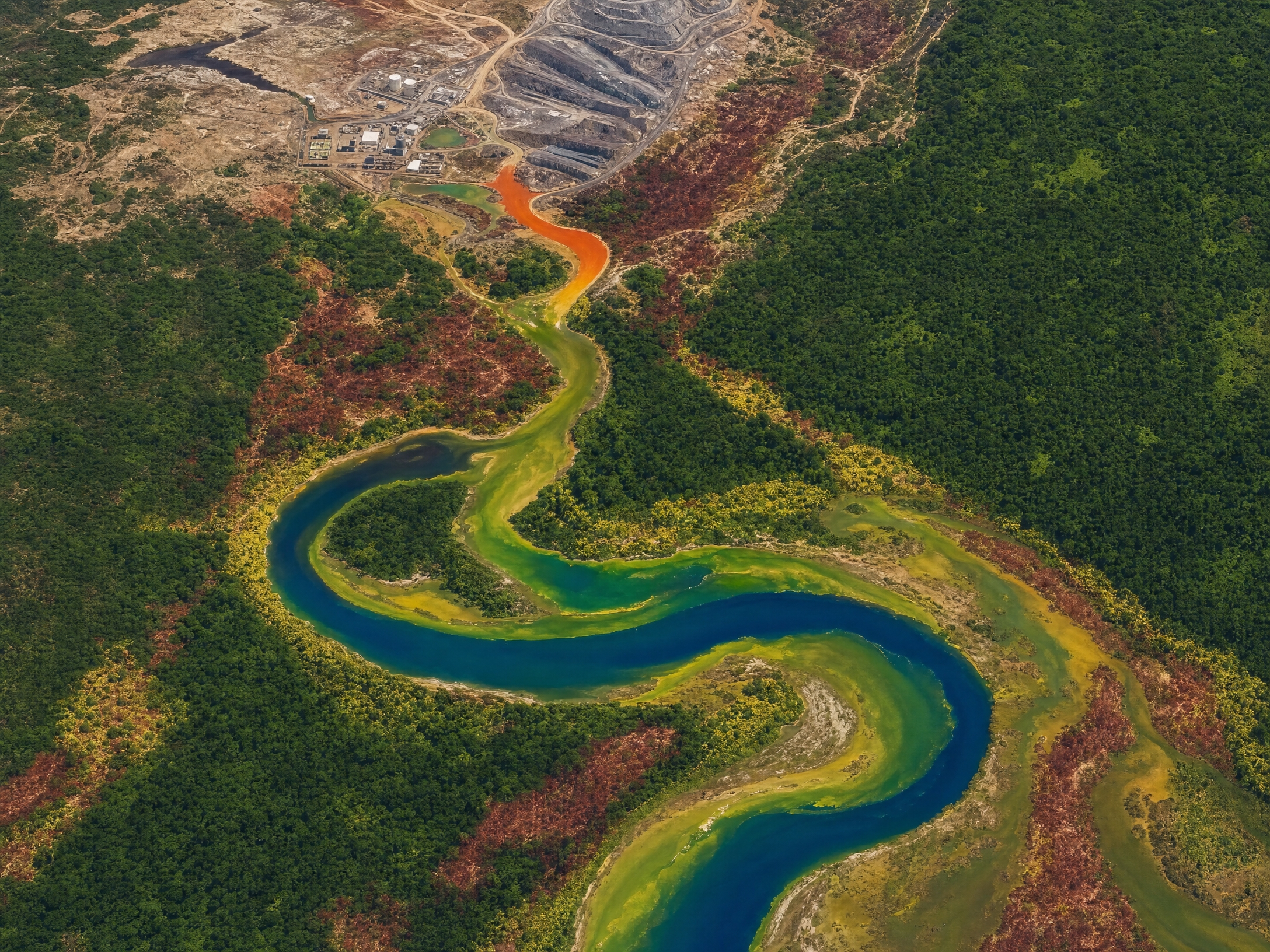
EPBC Act offset monitoring and compliance reporting.Rehabilitation progress tracking for bond release.Tailings storage facility vegetation monitoring.Dust suppression effectiveness assessment.Water quality and discharge monitoring.Calculate how much faster you could achieve bond release with objective, site-wide data.NRM Bodies & Conservation
Threatened species population monitoring.Habitat boundary mapping and change detection.Invasive species early detection.Bushfire recovery and regeneration tracking.Wetland health assessment.Environmental Consultants
Data layer for EIS (Environmental Impact Statements).Baseline surveys for development approvals.Ongoing monitoring programs for clients.Regulatory submission data packages.Expert witness evidence (objective, repeatable).Government & Councils
Crown land vegetation management.Coastal erosion monitoring programs.Waterway health assessment.Illegal clearing detection.Natural disaster damage assessment.Infrastructure & Development
Pre-construction environmental baseline surveys for road, rail, and pipeline corridors.Ongoing offset monitoring during construction phases.Post-construction rehabilitation evidence for approval conditions.Vegetation management corridor monitoring (powerlines, gas pipelines).Cumulative impact assessment across the project lifecycle.Every major infrastructure project in Australia requires environmental offsets. We provide the evidence that conditions are being met across the entire corridor, not just sample points.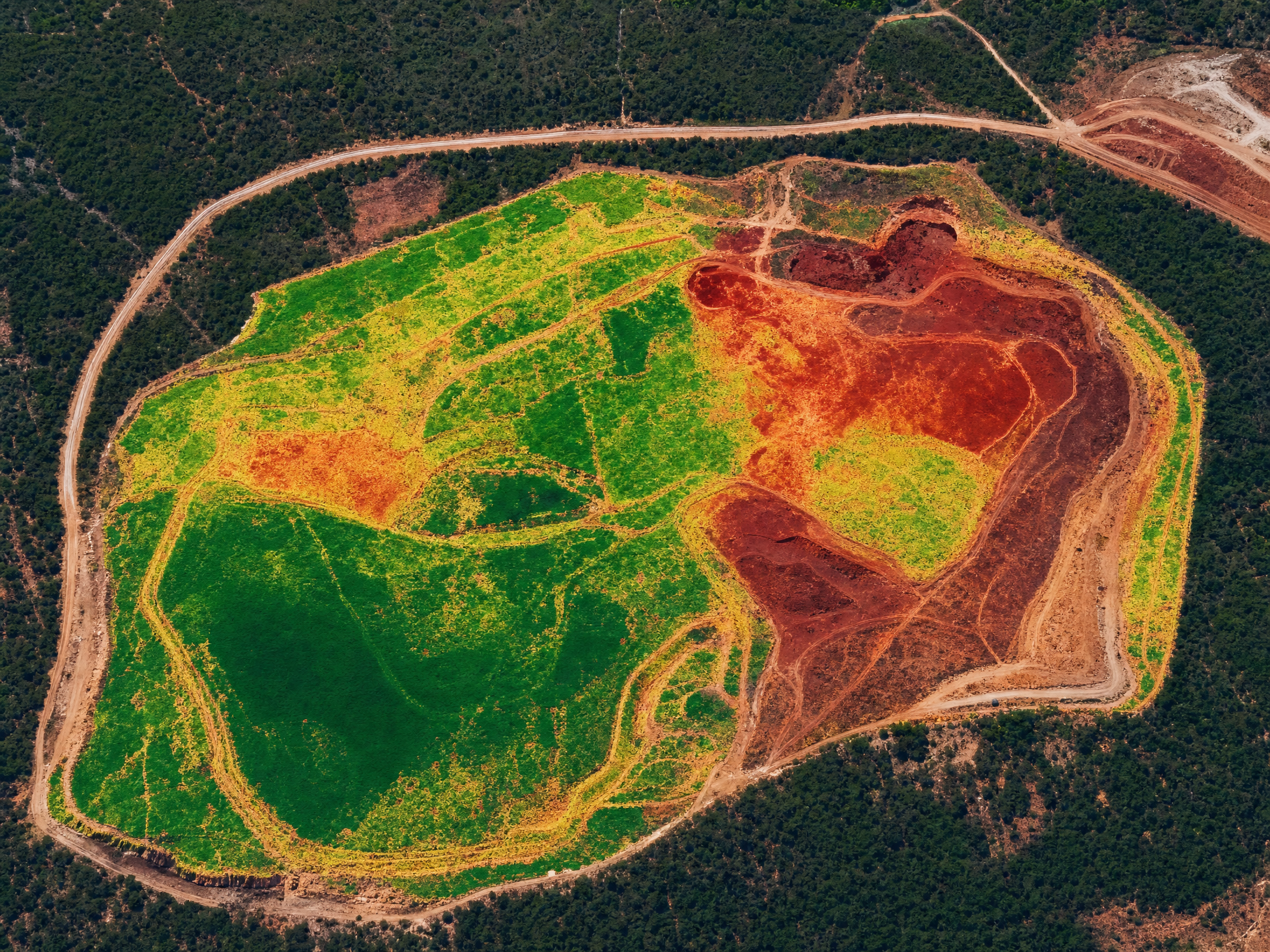
Applicable Services
Multi-spectral and Multi-sensor Inspection
High-resolution visual, photogrammetry, multispectral, hyperspectral, lidar and thermal data acquisition for vegetation mapping and health, land mapping, water quality, habitat condition, change detection, wildlife tracking and monitoring.
Precision interactive 3D to 8D digital twins, terrain, bathymetric and surface models for tracking erosion and habitat changes.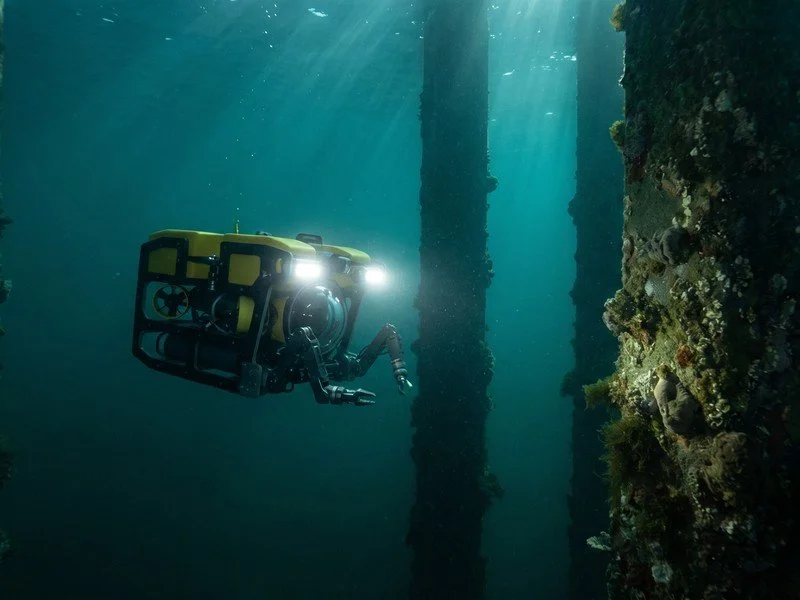
Underwater & Submerged Intelligence
Submerged inspections and mapping for assets, reef systems, marine mammals, bathymetric mapping and marine infrastructure.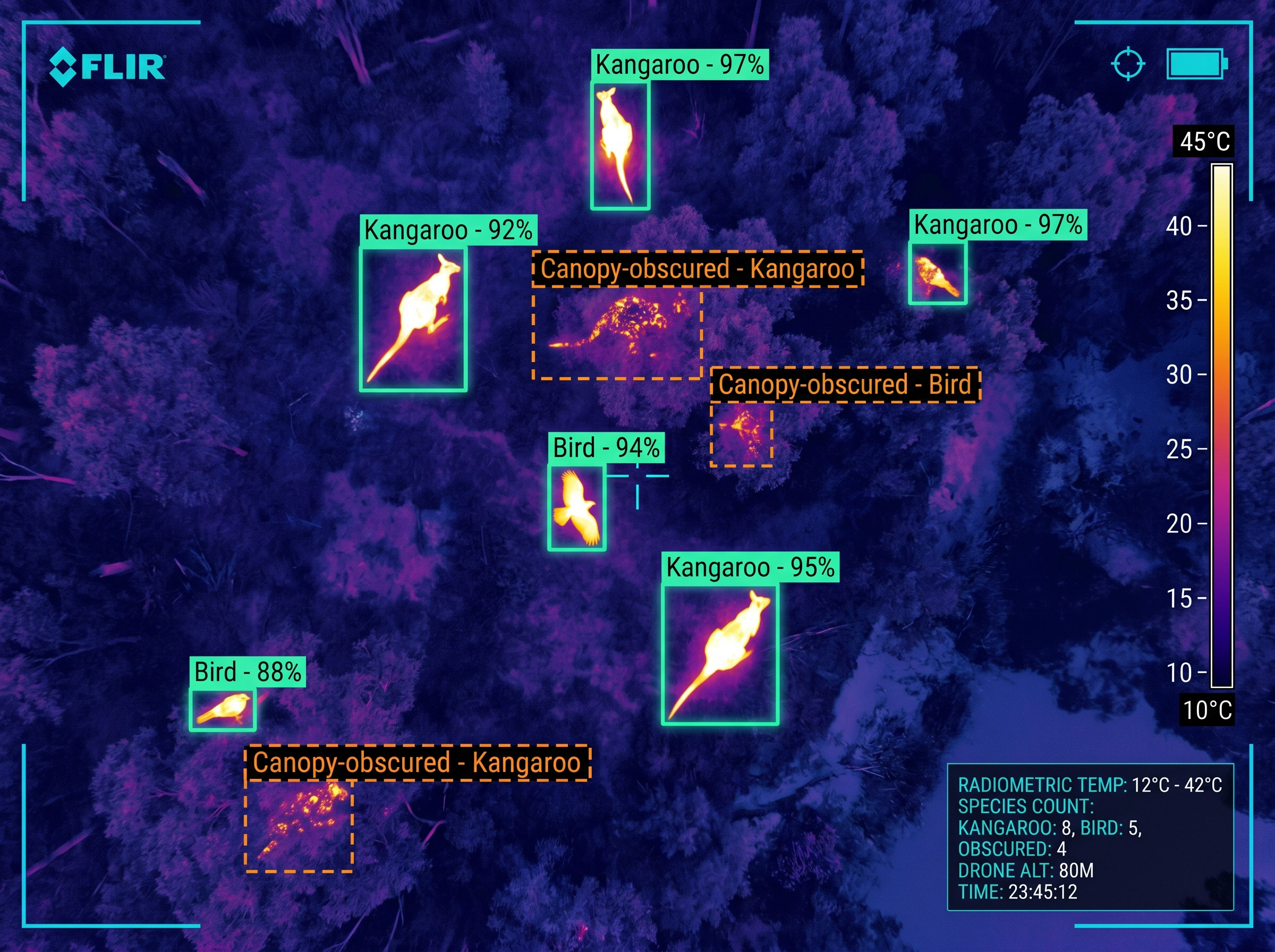
Radiometric geolocated data for wildlife tracking, monitoring, nocturnal surveys, and anomaly detection.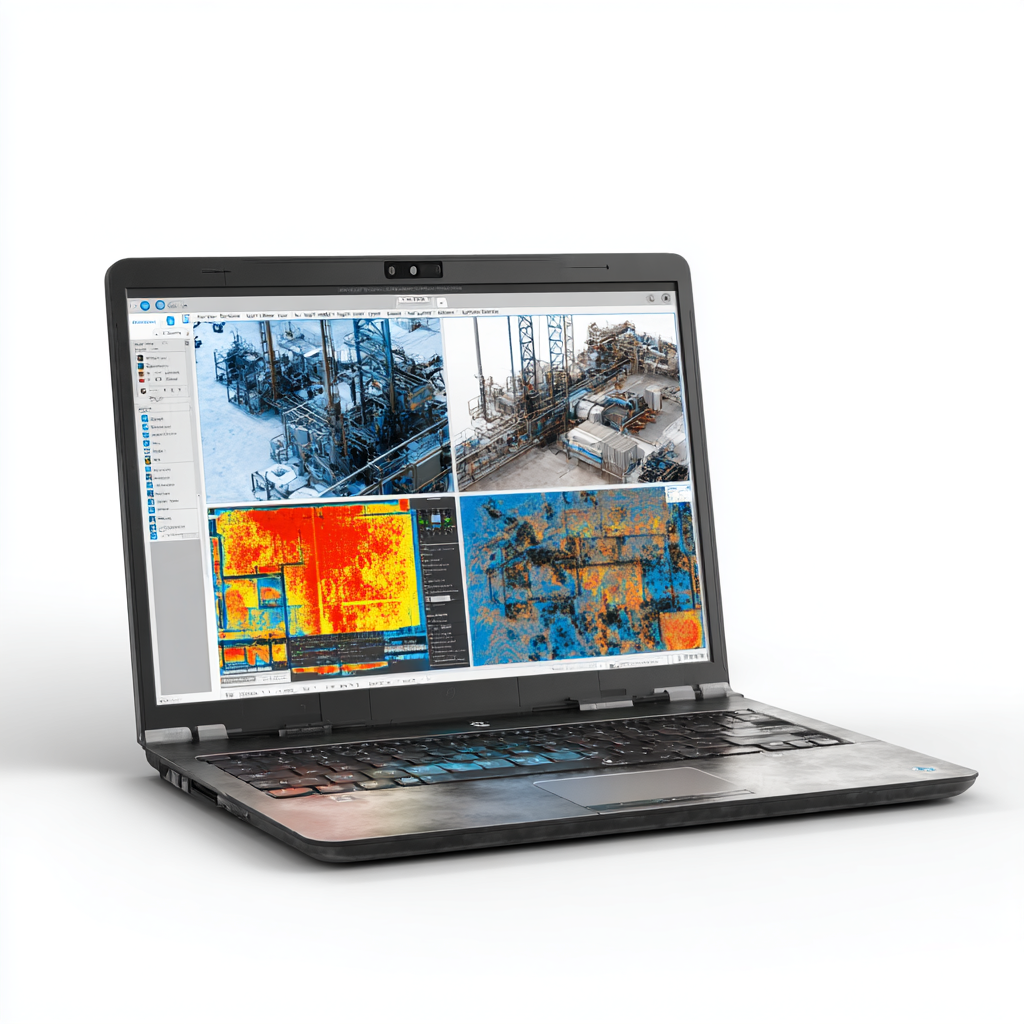
Long-term scheduled programs for rehabilitation sites and contaminated areas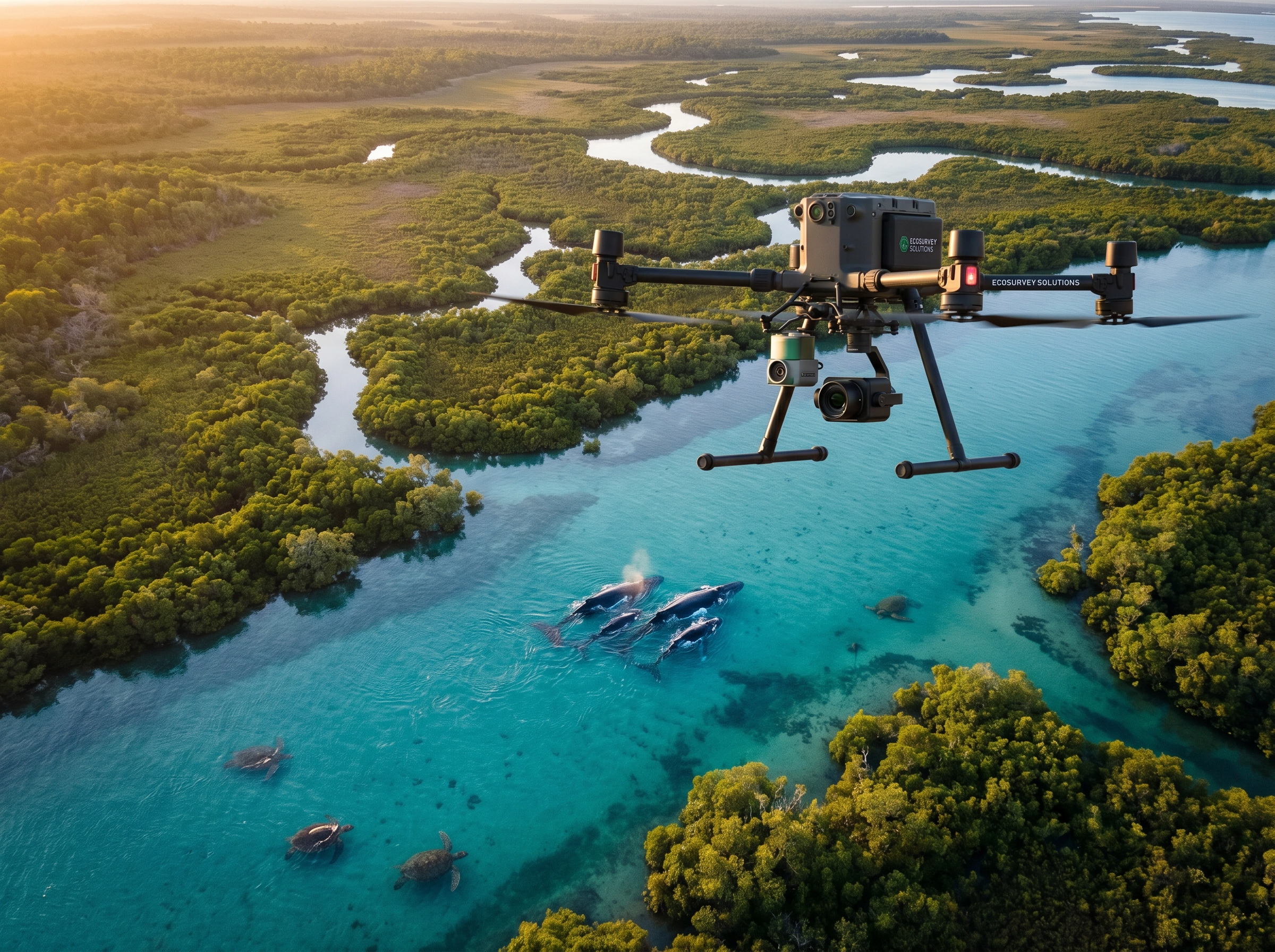
Security, Safety & Search and Rescue
Anti-poaching surveillance and illegal dumping detection and tracking for protected areas and conservation zones.Your Questions, Answered
How much does environmental drone monitoring cost in Australia?
Environmental drone monitoring typically costs 50-70% less than traditional field survey methods while delivering 100% site coverage versus 5-15% from ground transects. Ongoing monitoring contracts achieve 20-35% per-survey reductions through structured program pricing. Costs vary by site area, sensor requirements, and analysis complexity. Contact us for a scoping estimate based on your specific monitoring obligations.
How do drones minimise disturbance to wildlife?
We deploy low-noise enterprise platforms at optimal altitudes determined by species sensitivity guidelines. High-resolution cameras capture detailed imagery from a safe distance. Thermal sensors enable data capture in darkness without light disturbance. Zero ground contact eliminates biosecurity risks and habitat disturbance.
Can drone data be used for EPBC Act offset compliance?
Yes. We provide objective, repeatable data using high-resolution orthomosaics and multispectral imaging. By flying identical flight paths year-on-year, we create defensible visual baselines demonstrating vegetation growth, weed eradication, and habitat improvement across the entire offset area. All data is processed into your environmental digital twin for time-series comparison and delivered in GIS-ready formats compatible with regulatory submission requirements.
Can drone data support mining rehabilitation bond release?
Yes. Our LiDAR and photogrammetry services provide engineering-grade volumetric tracking of earthworks, precise erosion monitoring, and multispectral analysis of revegetation. The platform processes this into measurable 3D terrain models that demonstrate rehabilitation progress with centimetre accuracy, the robust evidence needed to support bond release applications. Rehabilitation trajectory reports predict the timeline to completion based on measured growth rates.
How accurate is drone vegetation mapping compared to satellite?
Drone-based multispectral mapping achieves 2-5cm ground sample distance (GSD), compared to 3-10m from satellite imagery, a 60-500x improvement in spatial resolution. This enables identification of individual plant stress, early-stage dieback, and weed species at the individual plant level rather than broad-area averages.
Can you track specific animal populations over time?
Yes. Thermal and visual sensors with RTK positioning establish repeatable flight paths. AI-powered detection (98.5% accuracy) enables precise population counts across multiple survey periods, tracking migration patterns, breeding success, and population health trends with scientific rigour.
What processing platform do you use for environmental data?
We operate an enterprise reality modelling and geospatial intelligence platform. Environmental data is processed through automated classification pipelines, multispectral analysis algorithms, and change detection engines. Deliverables are streamed via a browser-based 3D environment using open OGC 3D Tiles standards, enabling your team to access, measure, and compare datasets from any device without software installation.
Can you survey marine environments as well as terrestrial?
Yes. We combine aerial drone surveys with underwater ROVs for comprehensive above-and-below-water environmental assessments. Both datasets are unified into a single 3D model, one coordinate system, one timeline, one interactive viewer. Particularly valuable for reef monitoring, marine mammal surveys, coastal erosion tracking, and infrastructure impact studies.
What approvals do you hold for environmental work?
We hold a CASA commercial operators licence with advanced endorsements and additional specialist approvals enabling operations in sensitive and remote environments. We are also a Registered Suitable Operator with the Queensland Department of the Environment, Tourism, Science and Innovation. These approvals enable 10-50x greater coverage per deployment than operators with basic approvals, which is essential for vast conservation areas, remote mine sites, and time-sensitive wildlife surveys. We hold additional endorsements beyond what is listed here.
What happens to our data between surveys?
Your environmental digital twin persists between surveys. Teams can query historical data, compare any two dates, and generate compliance reports at any time via browser-based 3D viewer. When new survey data arrives, it is automatically aligned to previous epochs for change detection. The model is always available, not locked in a report that was delivered six months ago.
Can you consolidate multiple monitoring providers into one program?
Yes. We deliver aerial multispectral, thermal, LiDAR, ground-level 360, and underwater ROV in a single mobilisation. All data is processed into one unified digital twin, one coordinate system, one timeline, one report. Clients using 2-3 separate providers typically save 30-40% in duplicated mobilisation costs alone, before accounting for the value of spatially correlated data.
How do drones support bushfire recovery monitoring?
Post-bushfire, we capture multispectral imagery mapping burn severity (dNBR), identify surviving vegetation, and establish regeneration baselines. Repeat flights at 3, 6, and 12-month intervals track recovery at individual tree level. Time-series models provide quantitative evidence for land management decisions, insurance claims, and compliance reporting.
What environmental monitoring can underwater ROVs perform?
Underwater ROVs perform habitat mapping, coral health assessment, seagrass monitoring, water quality sampling, invasive species detection, and aquatic fauna surveys without disturbing the ecosystem. Unlike diver-based surveys that are limited to 30-60 minutes bottom time and create physical disturbance, ROVs can operate for 4-8 hours continuously, access depths to 500 metres, and capture consistent, repeatable transect data. The non-contact approach satisfies EPBC Act requirements for minimal environmental impact during monitoring of protected marine and freshwater habitats.
Sources
Department of Climate Change, Energy, the Environment and Water (DCCEEW), Environmental Offsets Audit Report, 2024. https://www.dcceew.gov.au/sites/default/files/documents/environmental-offsets-audit-report.pdf
DCCEEW, EPBC Act Compliance — Infringement Notices: Sojitz Blue Pty Ltd, 2026. https://www.dcceew.gov.au/environment/epbc/compliance/infringements
ABC News, McArthur River Mine $520 million rehabilitation bond, April 2023. https://www.abc.net.au/news/2023-04-21/mcarthur-river-mine-nt-rehabilitation-bond-court-decision/102246464
Government of Western Australia, Mining Rehabilitation Fund 2025 Data Release, 2025. https://www.wa.gov.au/government/publications/mining-rehabilitation-fund-2025-data-release
Norton Rose Fulbright, Understanding the EPBC Act Reforms: A Practical Guide, October 2025. https://www.nortonrosefulbright.com/en-au/knowledge/publications/40d6ce1c/understanding-the-epbc-act-reforms-a-practical-guide